 NamasteTrip
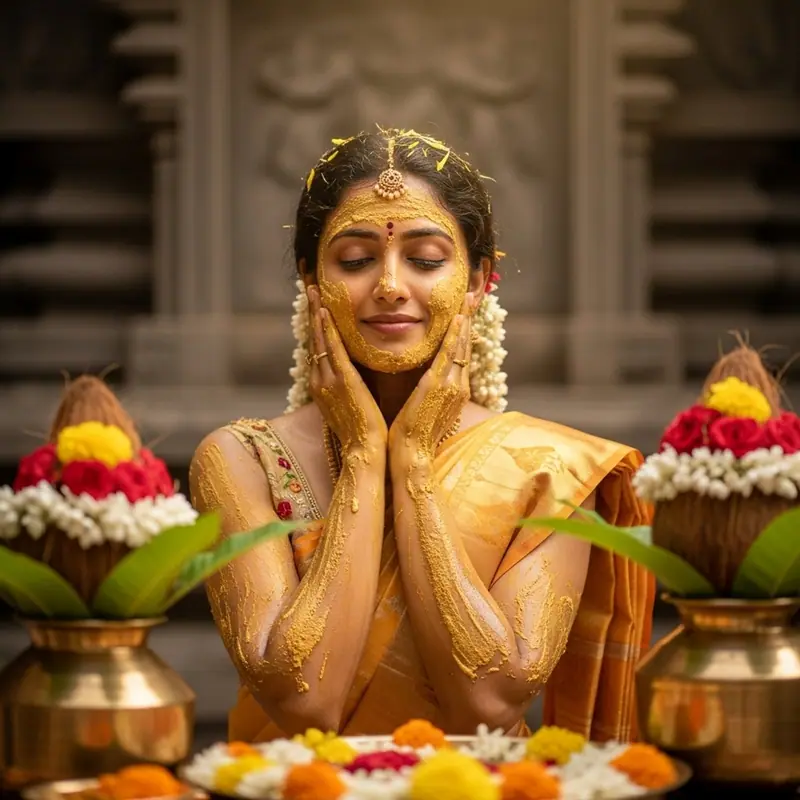
Ritual 1
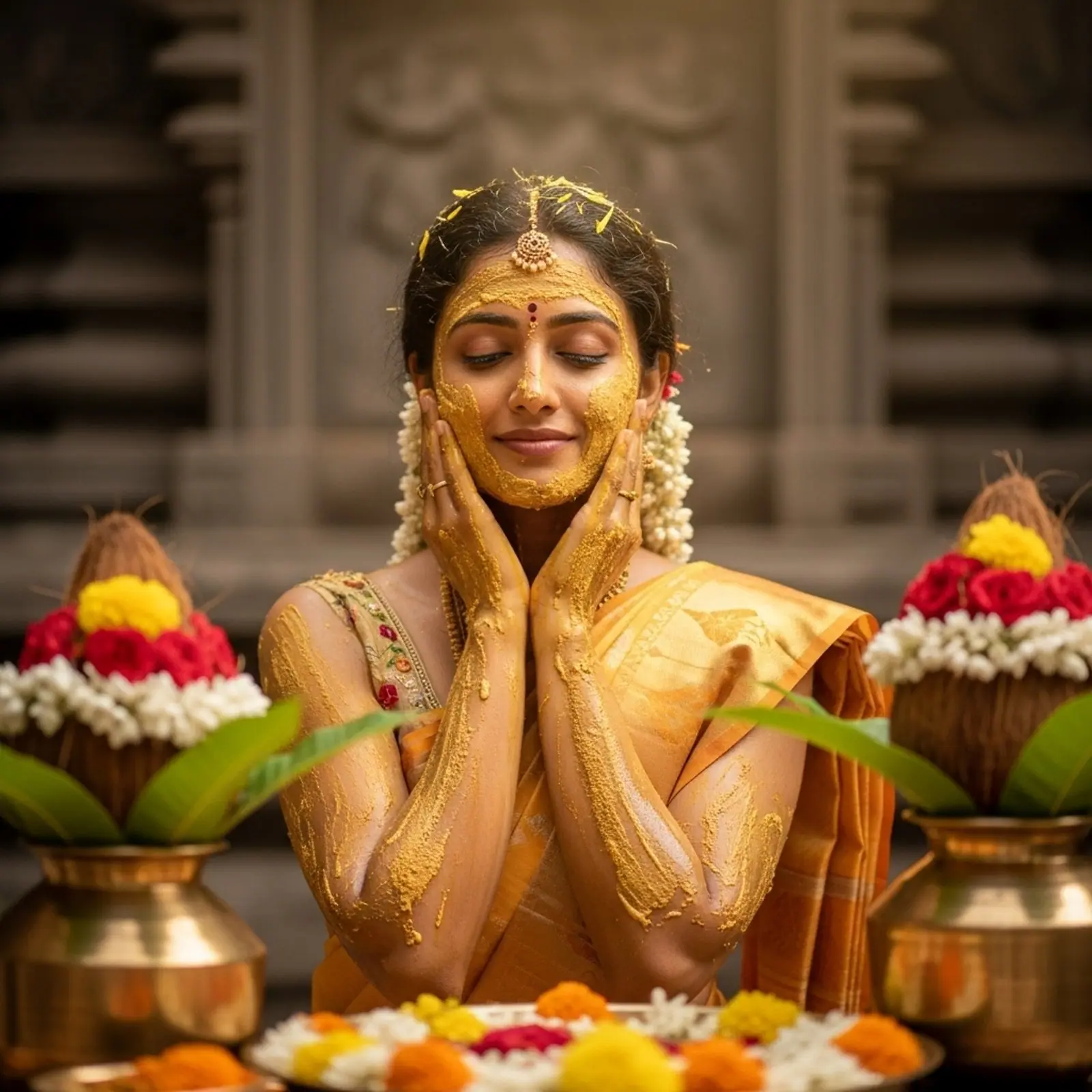
🌺 Mangala Snanam (Purifying Holy Bath)
The bride and groom take a ceremonial bath early in the morning, symbolising purity before entering sacred rituals. Turmeric, sandalwood, and oils are applied.
Explore the serene traditions and sacred rituals of a South Indian Hindu Wedding. From the Mangala Snanam and Mehendi to the Kalyanam Mandapam ceremony, chanting of mantras, and the sacred tying of the Thali/Mangalsutra, experience a culturally rich and deeply spiritual celebration across Tamil, Telugu, Kannada, and Malayalam traditions.
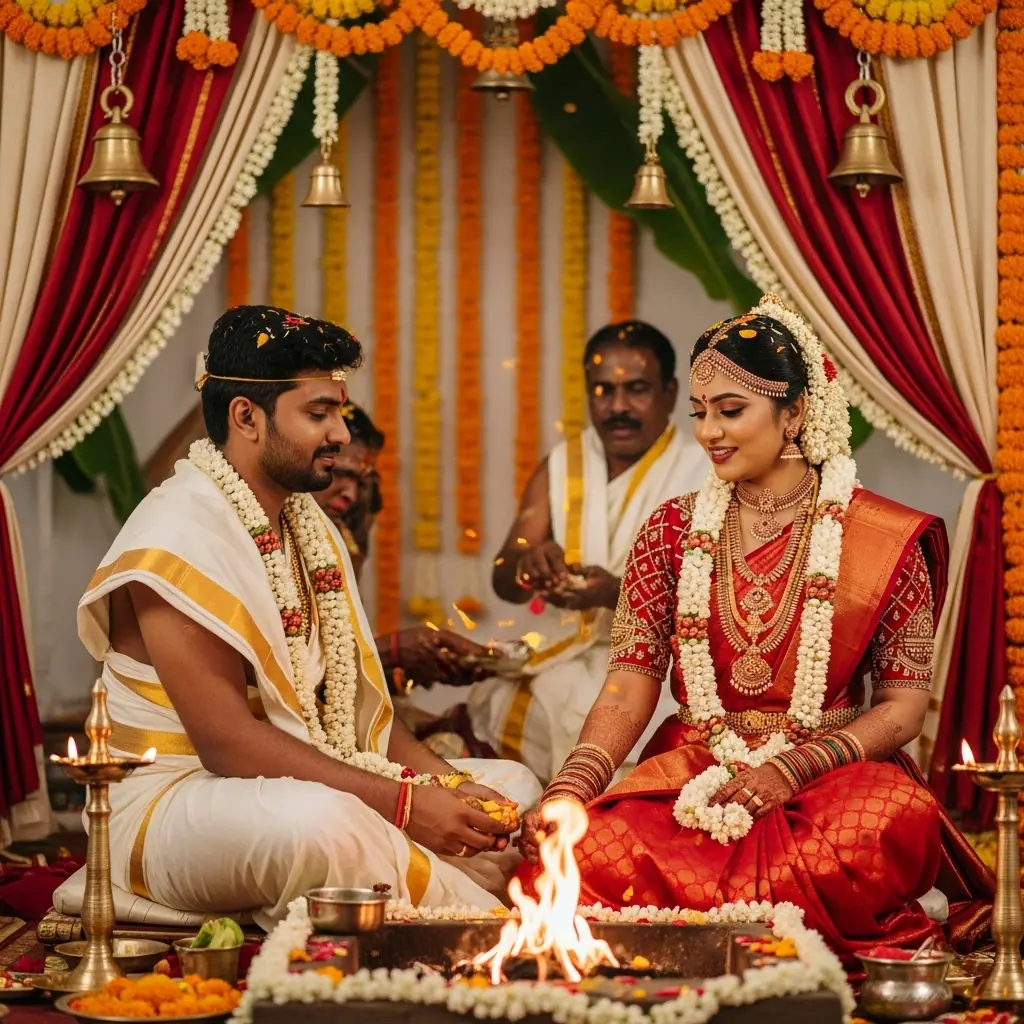
A South Indian Hindu Wedding is known for its purity, spiritual depth, temple-style traditions, and cultural elegance. Rooted in Vedic rituals and family customs, it brings two families together in a serene, sacred celebration filled with blessings and ceremonial beauty.
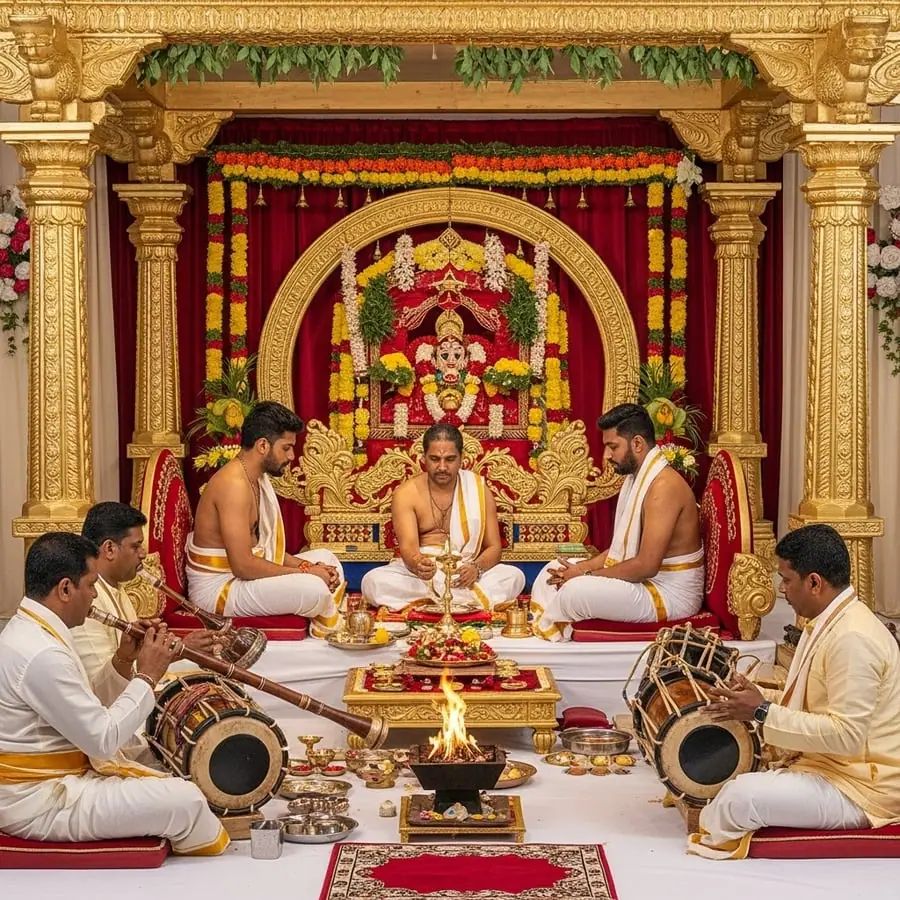
A South Indian Hindu Wedding is known for its purity, spiritual depth, temple-style traditions, and cultural elegance. Rooted in Vedic rituals and family customs, it brings two families together in a serene, sacred celebration filled with blessings and ceremonial beauty.
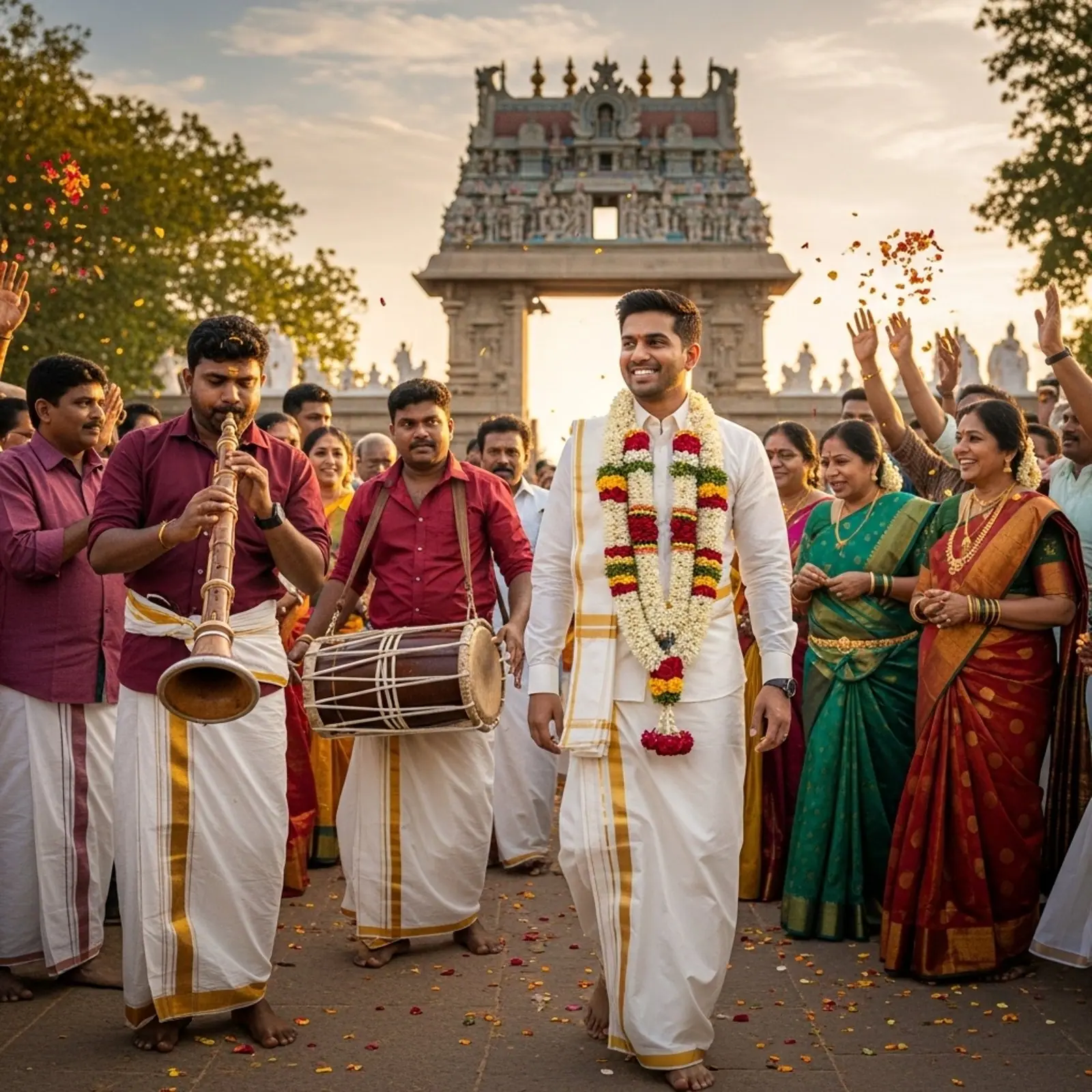
Depending on the community (Tamil, Telugu, Kannada, or Malayalam), the ceremonies may include Mangala Snanam (purifying holy bath), Mehendi, Vratham (pre-wedding vow ritual), Jaanavasam or groom’s procession, and the sacred Kalyanam Mandapam ceremony.
The highlight of the ceremony is the groom tying the sacred Thali/Mangalsutra around the bride’s neck, followed by blessings, music (nadaswaram & thavil), and beautiful family traditions. For international visitors, it is an unforgettable insight into South India’s rich spiritual culture.
Here's what you'll see — and often take part in — during the celebrations.
The bride and groom take a ceremonial bath early in the morning, symbolising purity before entering sacred rituals. Turmeric, sandalwood, and oils are applied.
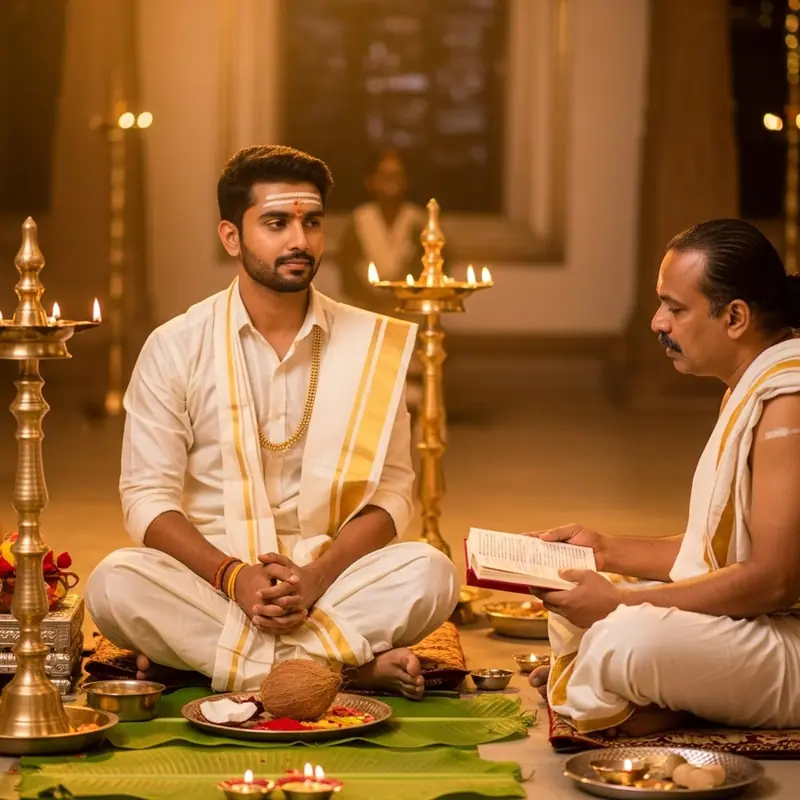
A sacred ritual where the groom (and sometimes bride) take vows with blessings from elders, preparing spiritually for the marriage ceremony.
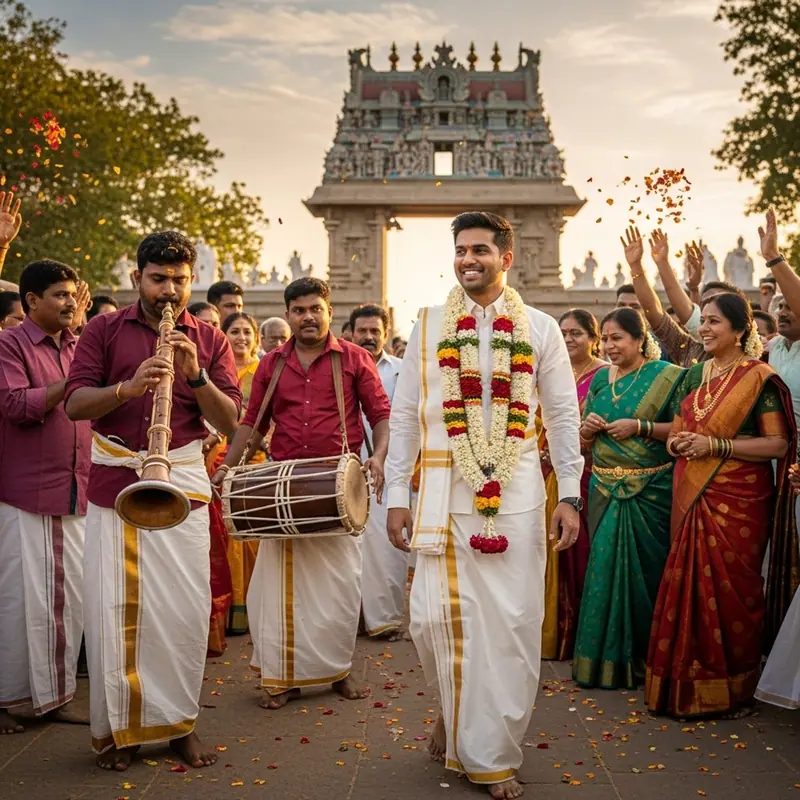
Similar to the North Indian baraat, the groom arrives in a fun ceremonial procession, often with nadaswaram and thavil music instead of dhol.
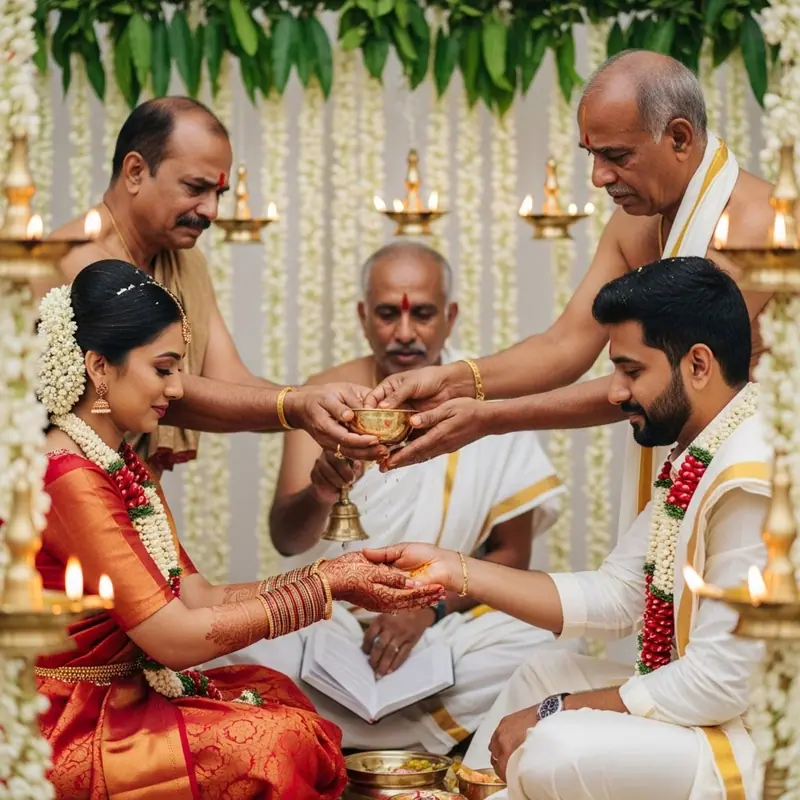
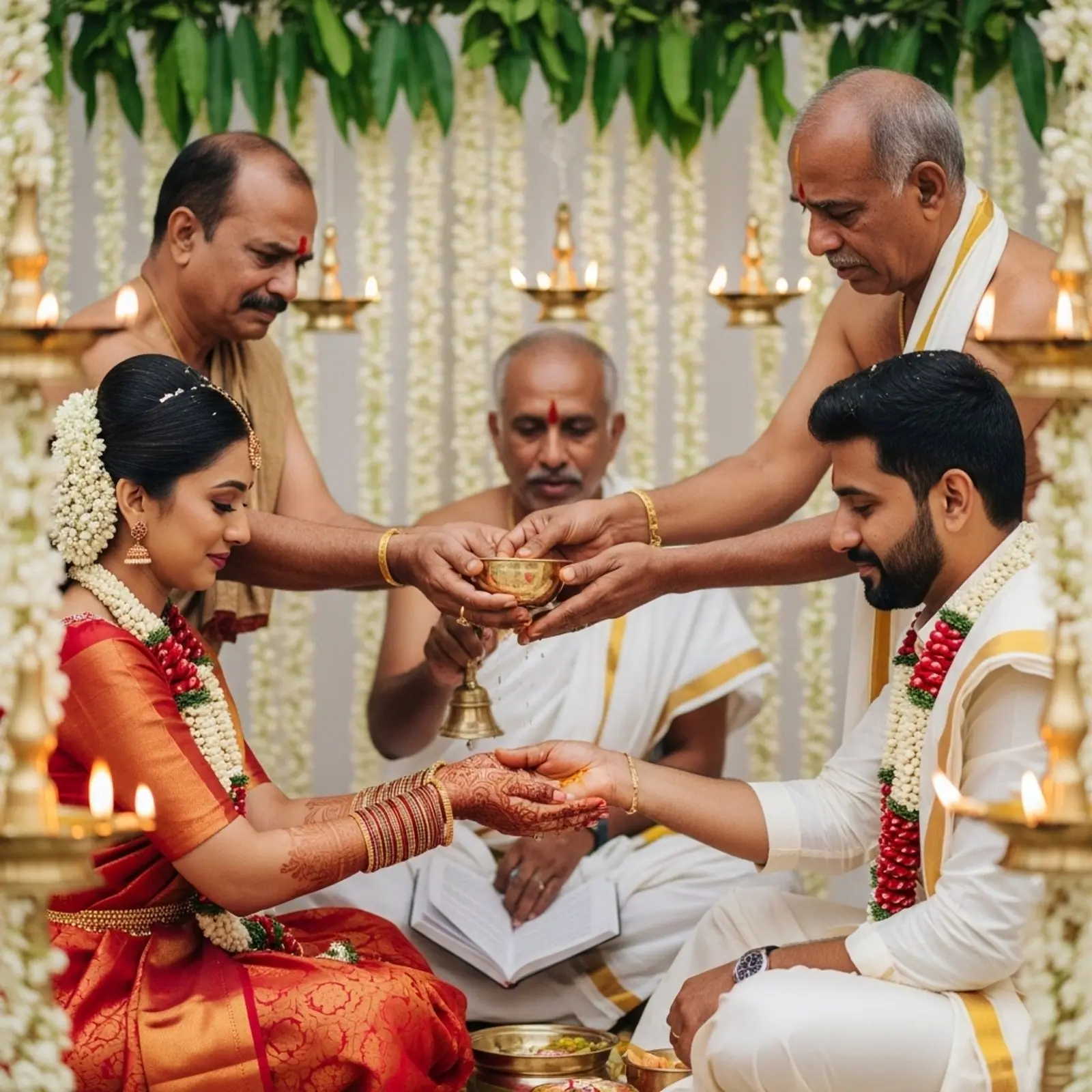
The bride’s parents formally offer their daughter to the groom in a sacred act of love and blessings, accompanied by Vedic mantras.
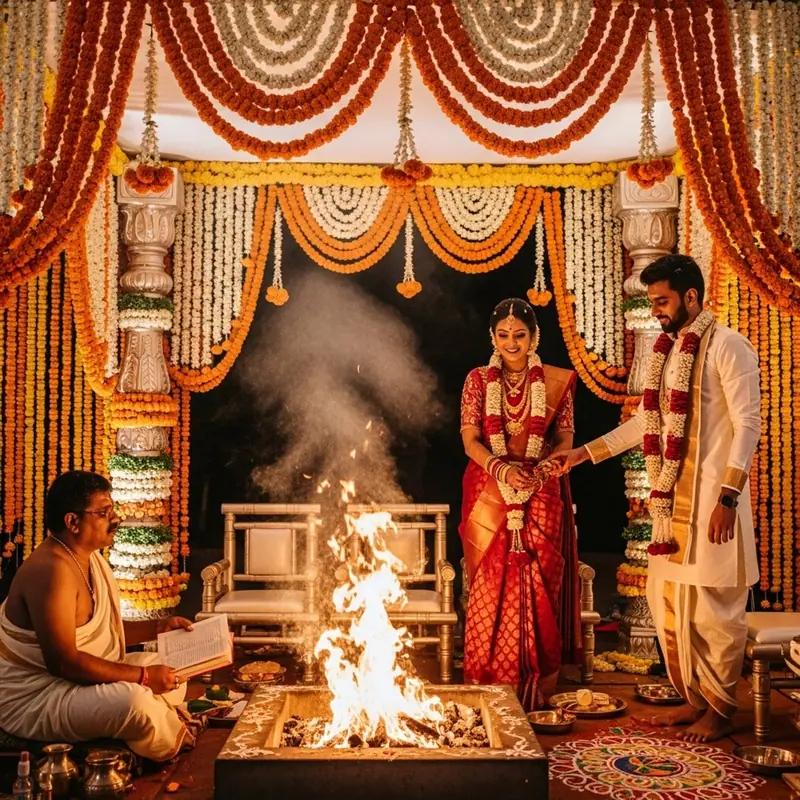
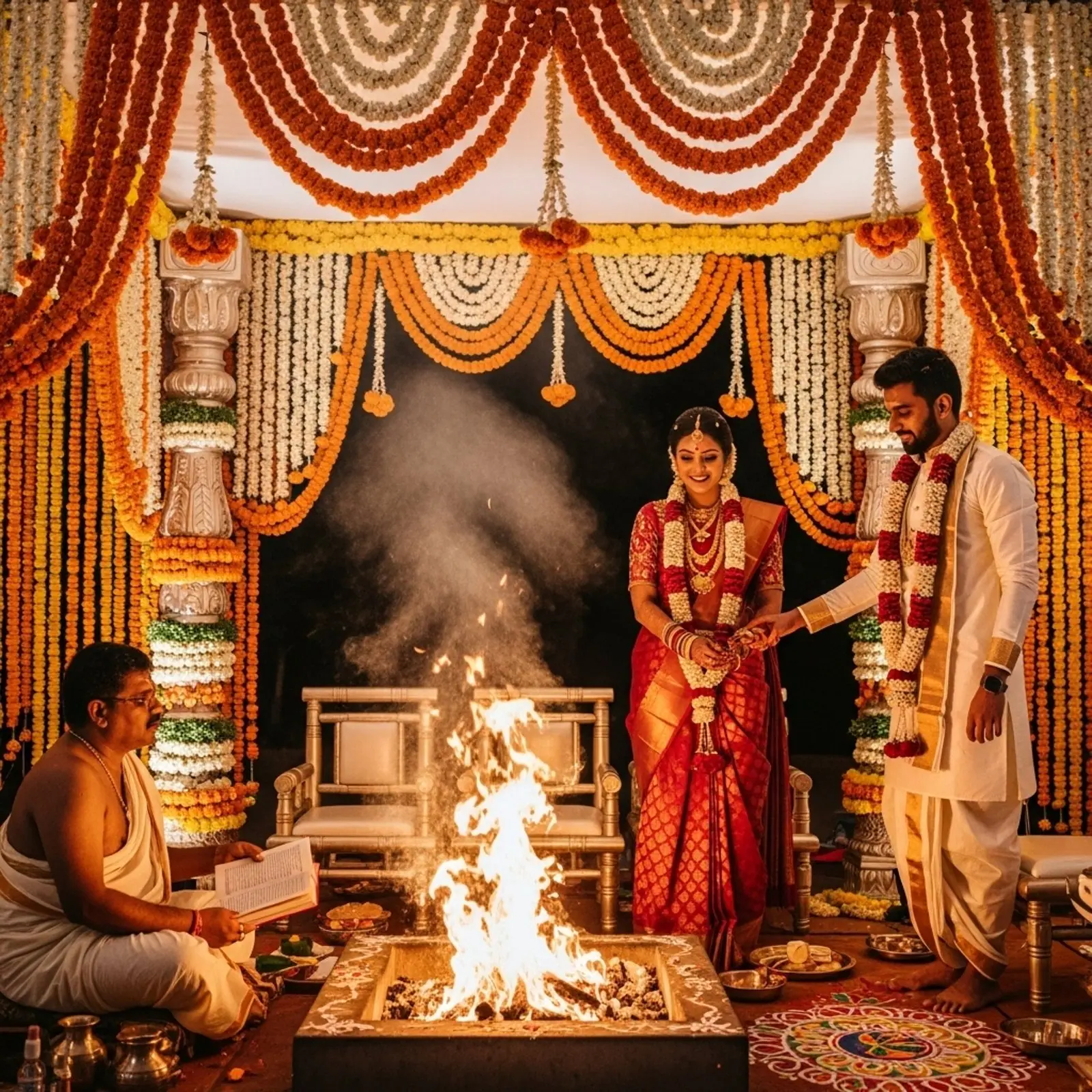
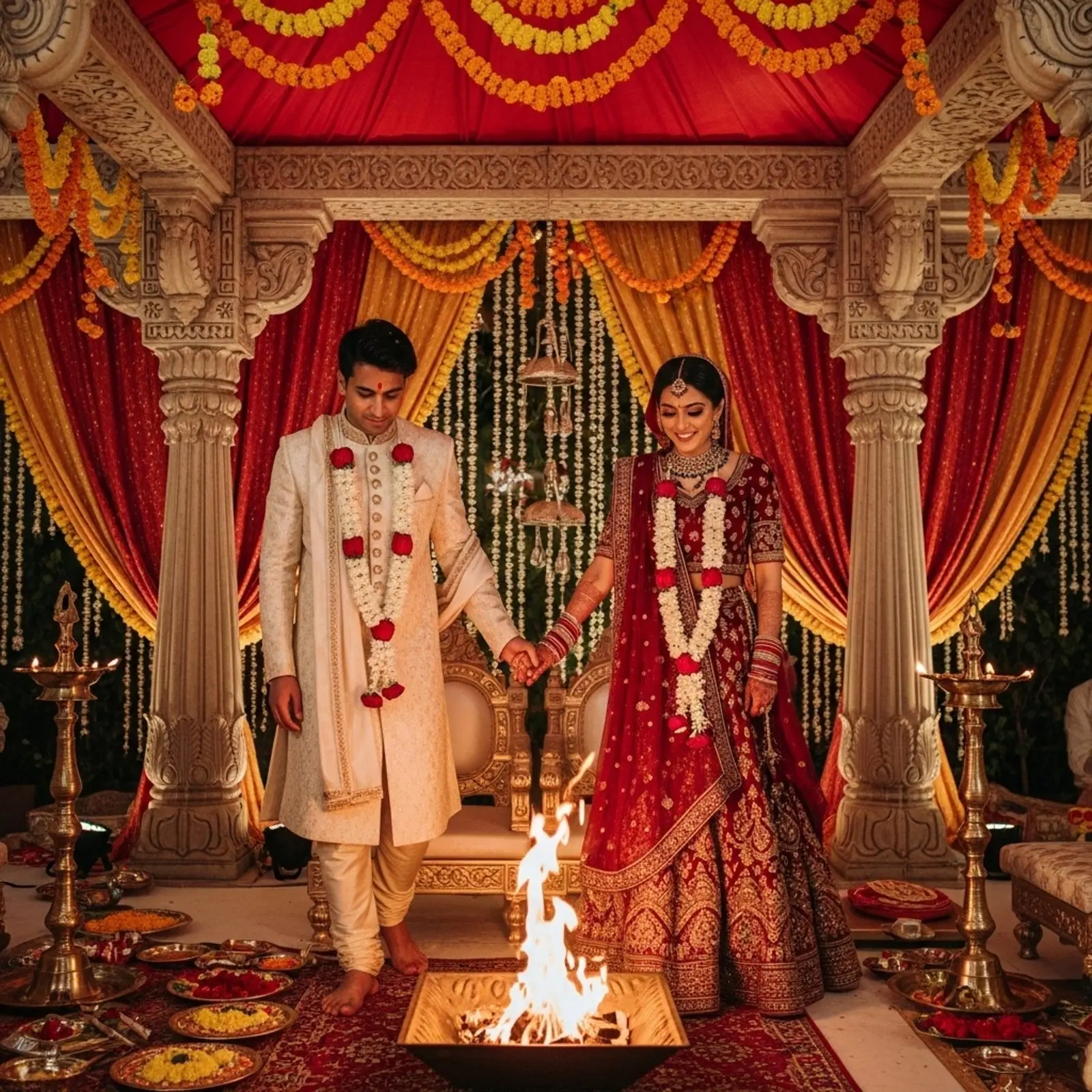
The couple walks around the holy fire, taking vows of trust, love, and commitment, guided by a priest chanting mantras.
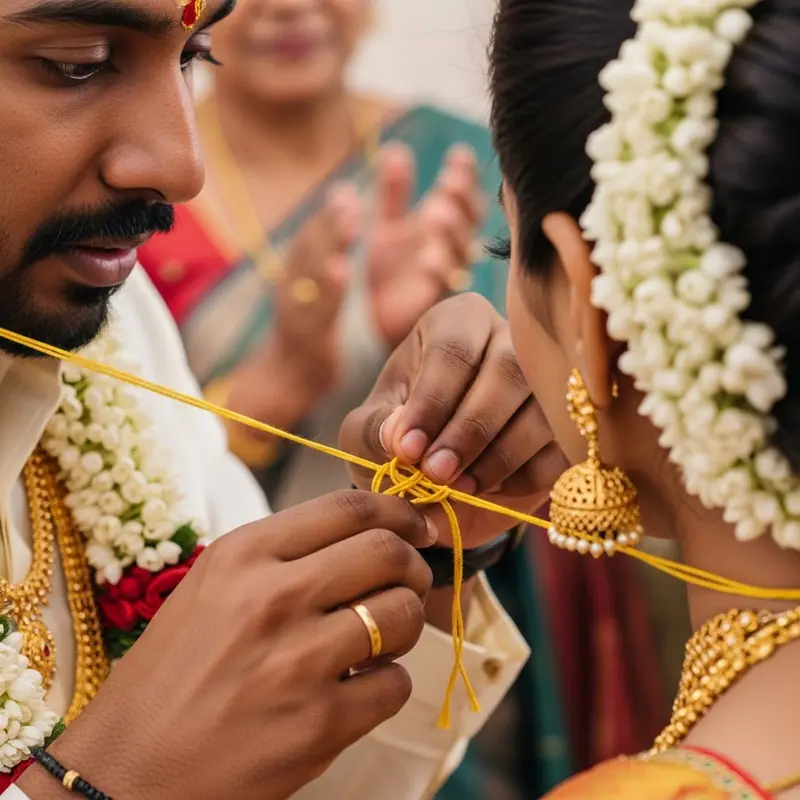
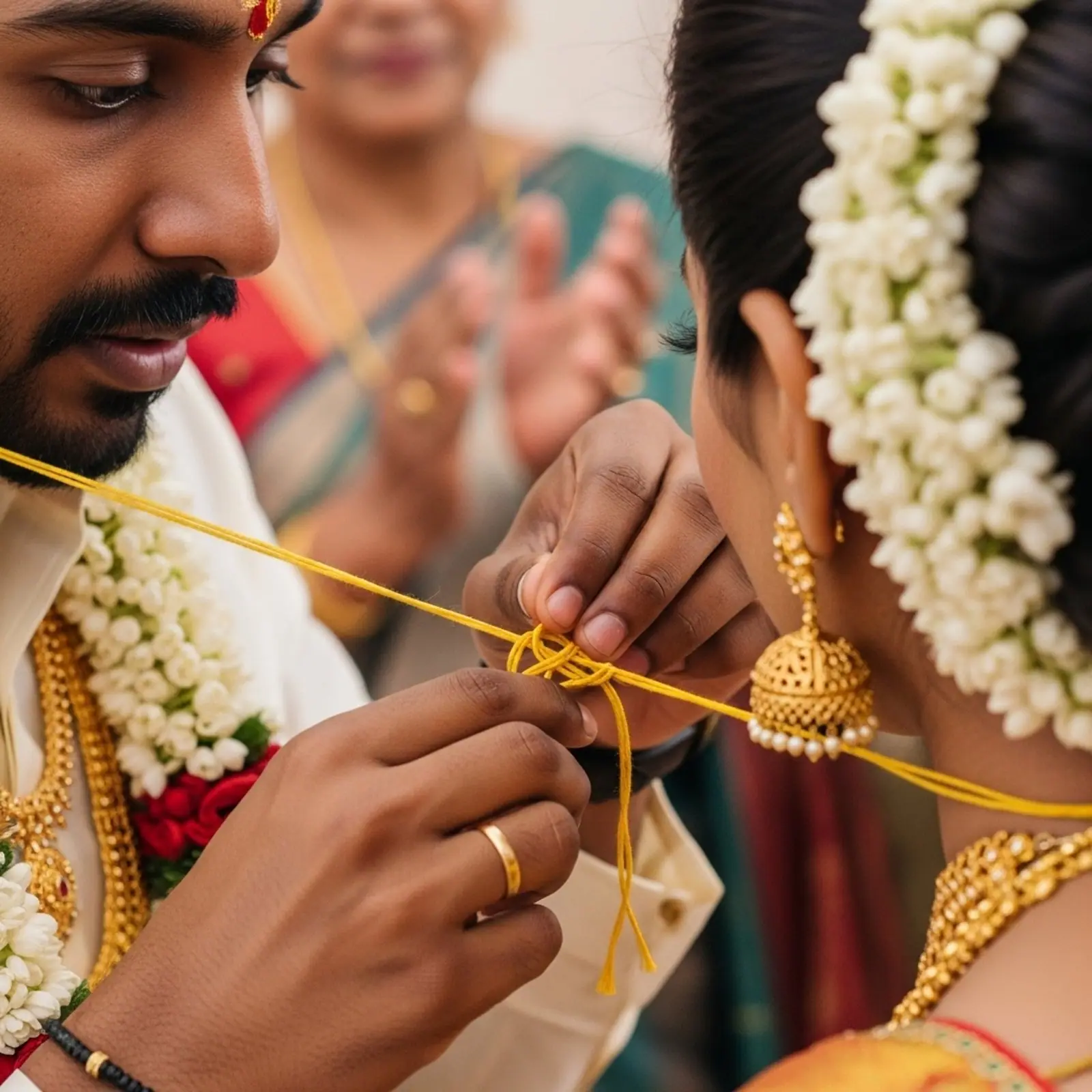
The groom ties the sacred yellow thread with a gold thali around the bride’s neck. This is the most important and emotional moment of a South Indian wedding.
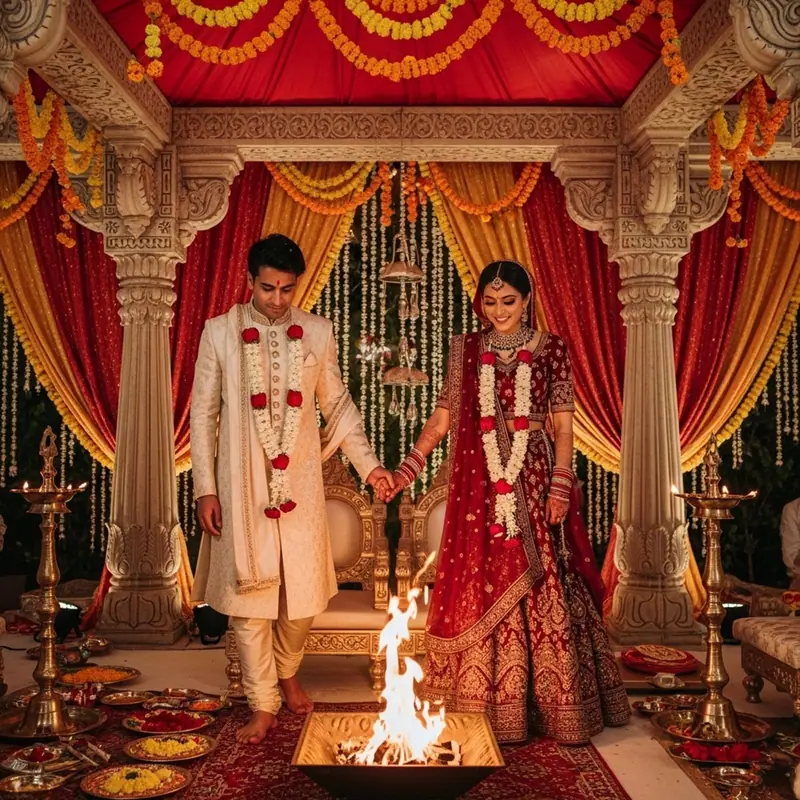
The couple takes seven symbolic steps, each representing promises of love, care, strength, prosperity, respect, friendship, and devotion.
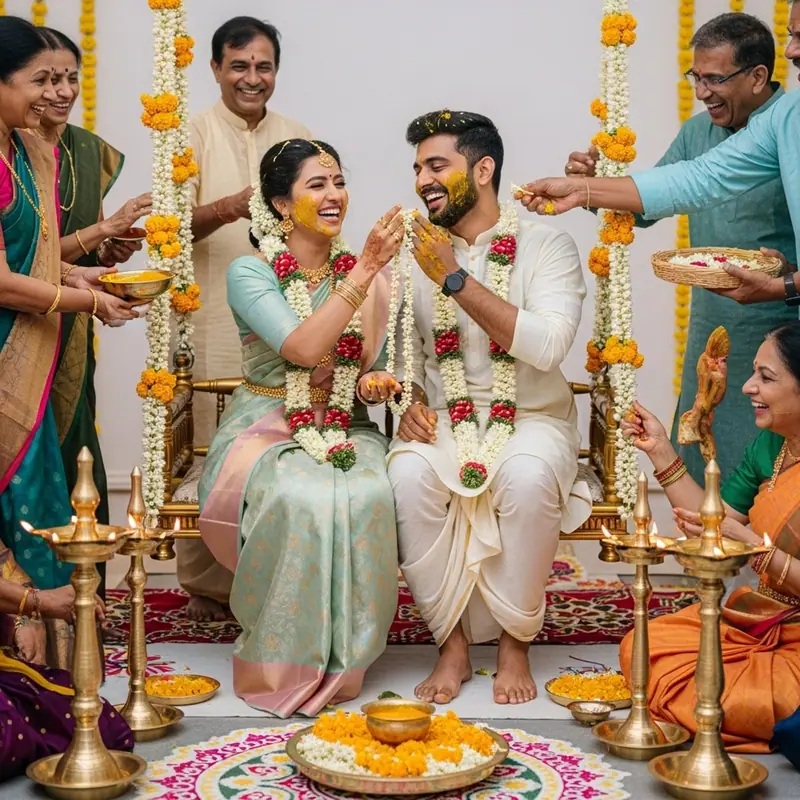
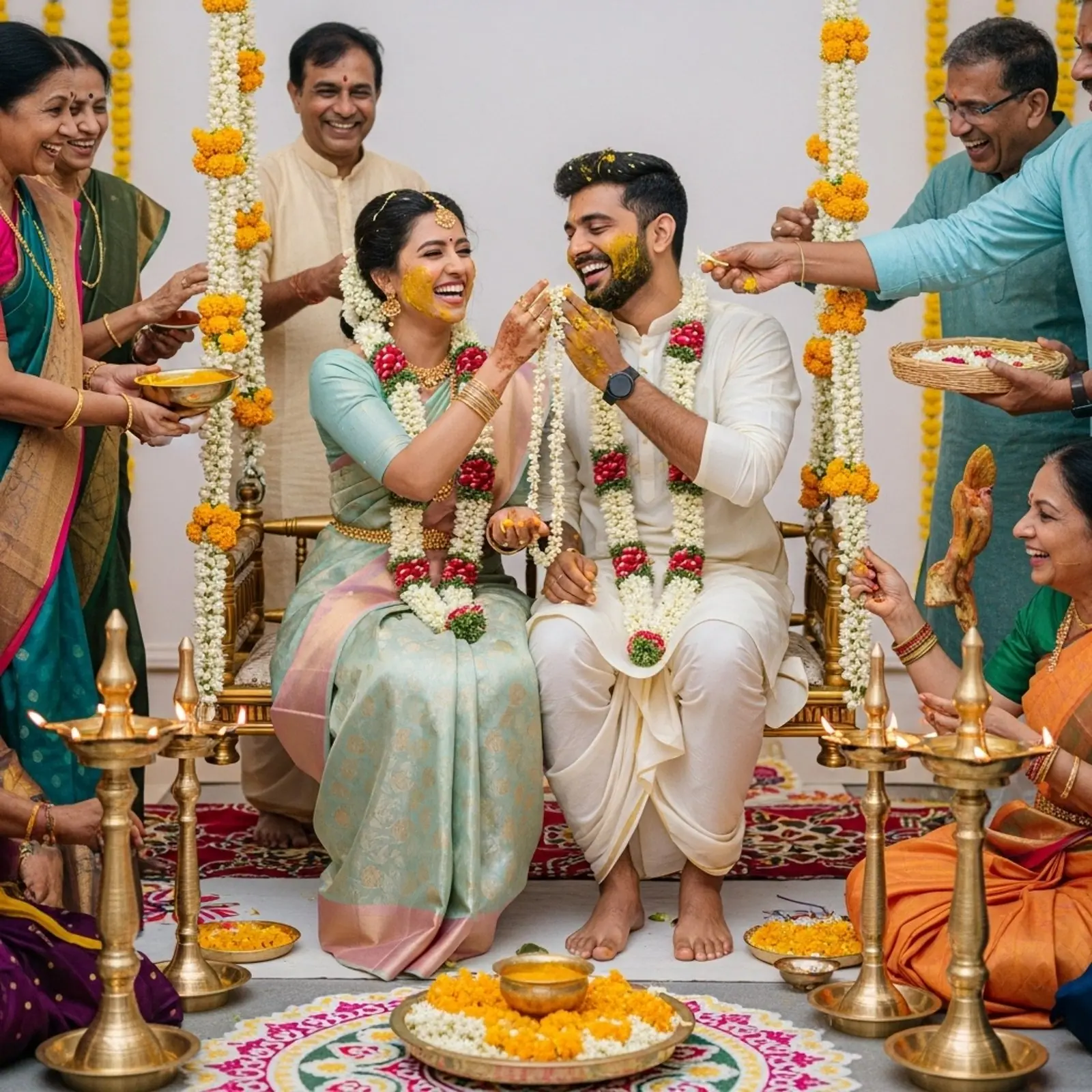
A playful and joyful post-wedding ritual involving turmeric, flowers, and family interaction — symbolising harmony and new beginnings.
Women wear a silk saree (such as Kanjeevaram) with jasmine flowers in the hair. Men wear a white or cream veshti/mundu with a silk shirt or kurta. Shoes come off in the mandapam.
A traditional banana-leaf feast (sadya or virundhu): rice, sambar, rasam, avial, poriyal, pickles, appalam and payasam — usually fully vegetarian.
Chennai, Bengaluru, Hyderabad, Kochi, Madurai and temple towns across Tamil Nadu, Karnataka, Kerala, Andhra Pradesh and Telangana. Serene, sacred and deeply traditional — often held early in the morning at a temple-style mandapam.
Every family is different, but most celebrations follow this rhythm. Join all three days or only the main ceremony.
Arrive in Chennai, Bengaluru, Hyderabad, Kochi or Madurai and meet the family. In the evening the groom is welcomed with the Janavasam procession and a nadaswaram band; the engagement (Nichayathartham) often takes place the same night.
The ceremony usually starts early in the morning at an auspicious time (muhurtham). Watch the playful Kashi Yatra, the Oonjal swing, Kanyadaanam, the tying of the sacred thread (Mangalya Dharanam) and Saptapadi — seven steps together. A banana-leaf feast follows.
Visit a local temple with the family — Kapaleeshwarar in Chennai, Meenakshi in Madurai or a Kerala temple — and explore the city's markets for silk sarees and jasmine.
South Indian weddings we host usually take place in Chennai, Bengaluru, Hyderabad, Kochi, Madurai and temple towns across Tamil Nadu, Karnataka, Kerala, Andhra Pradesh and Telangana. The most convenient airports are:
| City | Code | Airport |
|---|---|---|
| Chennai | MAA | Chennai International |
| Bengaluru | BLR | Kempegowda International |
| Kochi | COK | Cochin International |
Compare fares on our flight search and ask us for hotels near the venue.
Cash in an envelope or a gift for the couple is common. Avoid giving money in black or white envelopes; choose red, gold or a floral design. Many families also appreciate sweets or fruit for the household.
Full guide: Indian wedding etiquette for foreigners · what to wear.
Send us your travel dates and group size. We'll connect you with a welcoming family, help with traditional attire and brief you on every ritual.
We reply within 24 hours.
A South Indian Hindu wedding usually begins early in the morning and centres on the tying of the thali (mangalsutra) and the saptapadi, the seven steps taken before the sacred fire. Under Section 7 of India’s Hindu Marriage Act, 1955, a marriage that includes the saptapadi becomes complete and binding when the seventh step is taken.
South Indian weddings take place throughout the year in Tamil Nadu, Karnataka, Kerala, Andhra Pradesh and Telangana, with dates set by regional calendars. Key rituals are Mangala Snanam, Vratham, Jaanavasam, Kanyadaanam, the tying of the thali and the Saptapadi, and many ceremonies begin early in the morning, so guests should plan for a dawn start.
Most foreign travellers need a visa to visit India. The Government of India’s official e-Visa portal offers e-Tourist visas valid for 30 days, 1 year or 5 years, and applications must be submitted at least 4 days before arrival. NamasteTrip does not issue visas, so apply only on the official website, indianvisaonline.gov.in.
Last reviewed on 6 October 2026 by the NamasteTrip team.
Still have a question? Message us on WhatsApp — a real person replies.
South Indian weddings are usually shorter, more temple-like and deeply spiritual. Ceremonies often start early in the morning, use nadaswaram music instead of dhol, and the key moment is tying the Thali/Mangalsutra.
The groom ties a sacred yellow thread with a gold pendant (thali) around the bride's neck — the most important and emotional moment of a South Indian wedding.
Women often wear silk sarees; men wear a veshti/mundu with a shirt or a kurta. Remove shoes in the mandapam area.
Tamil, Telugu, Kannada and Malayali Hindu weddings, depending on the families available during your dates.
A traditional banana-leaf feast (sadya or virundhu): rice, sambar, rasam, avial, poriyal, pickles, appalam and payasam — usually fully vegetarian.
Women wear a silk saree (such as Kanjeevaram) with jasmine flowers in the hair. Men wear a white or cream veshti/mundu with a silk shirt or kurta. Shoes come off in the mandapam.
Cash in an envelope or a gift for the couple is common. Avoid giving money in black or white envelopes; choose red, gold or a floral design. Many families also appreciate sweets or fruit for the household.
Depending on the city: Chennai – Chennai International (MAA); Bengaluru – Kempegowda International (BLR); Kochi – Cochin International (COK).
Usually 1–3 days. A typical plan: Day 1: Arrival & Janavasam; Day 2: Muhurtham (the wedding); Day 3: Temple & city. You can join all days or only the main ceremony.
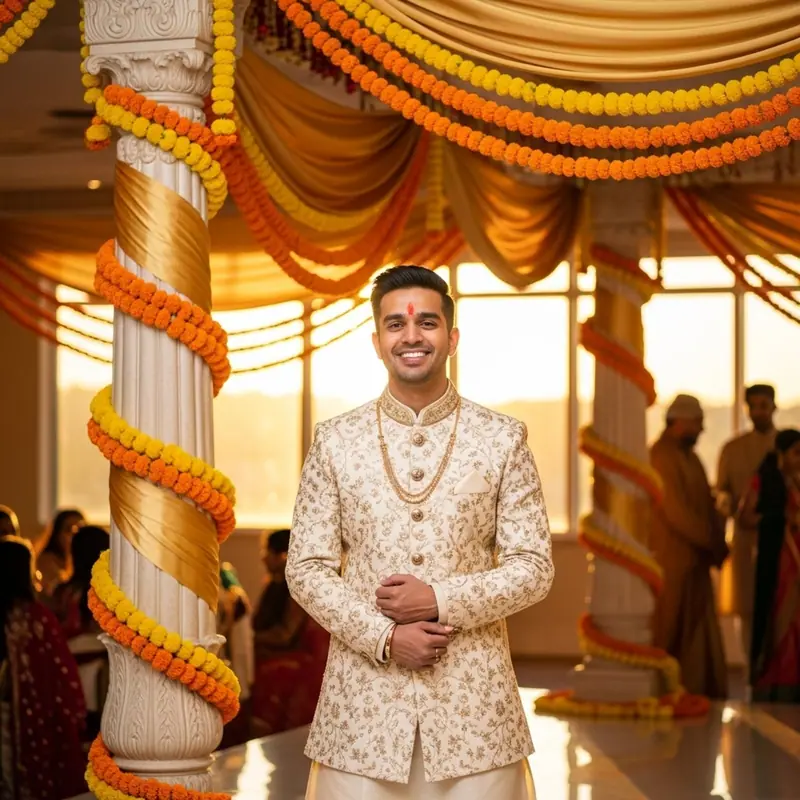
Baraat, pheras, sindoor, lavish décor and vibrant rituals. Popular in Delhi, UP & MP.
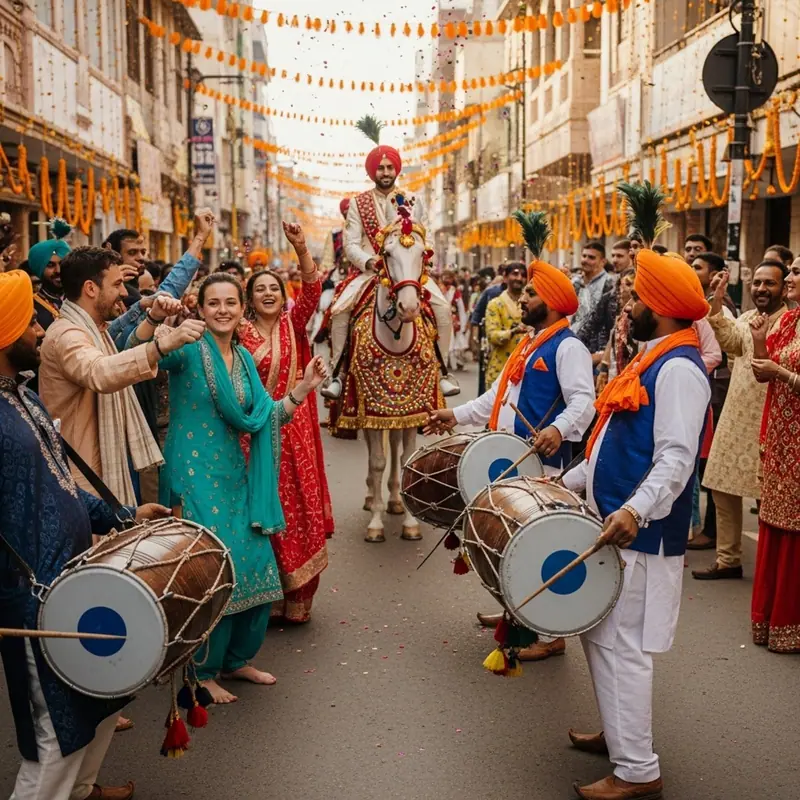
High-energy bhangra, dhol, Anand Karaj (Sikh ceremony), fun and celebration.
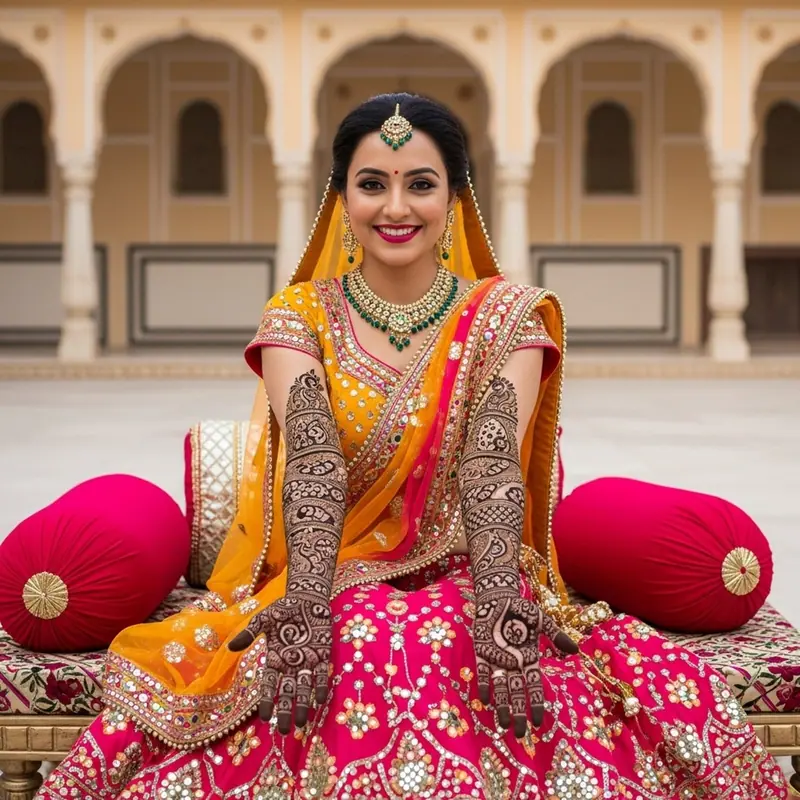
Fort palaces, royal attire, traditional folk music and grand heritage ceremonies.