 NamasteTrip
Greetings and meeting the family
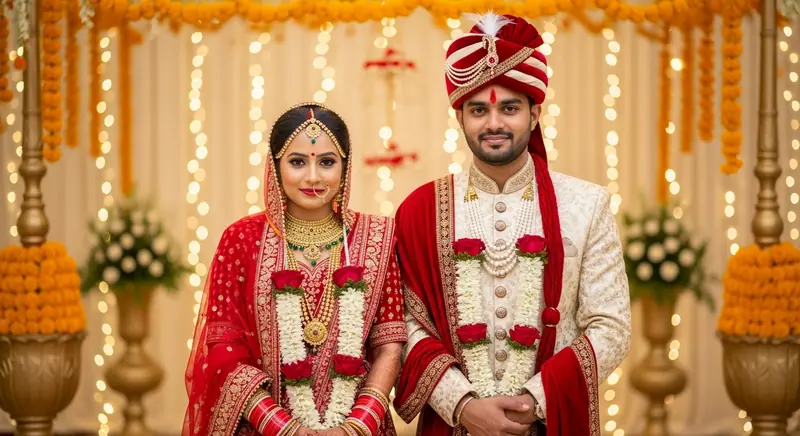
A simple namaste — palms pressed together with a slight bow — works everywhere. Greet elders first. You may see younger relatives touching the feet of elders as a sign of respect; you're welcome to do so, but a warm namaste is perfectly polite. Avoid hugging or kissing unless the family initiates it.
Gifts: what to give
The most common wedding gift in India is shagun — cash in a decorated envelope, handed to the couple or their parents. Amounts ending in 1 (for example ₹501, ₹1,101 or ₹2,100) are considered auspicious because the extra rupee symbolises continuity. A thoughtful item from your home country is also appreciated. Avoid leather goods for strictly religious families and avoid black gift wrapping.
Food, alcohol and eating
- Many wedding menus are fully vegetarian; some are not — never assume.
- Alcohol may not be served at all, especially at religious or Sikh ceremonies. Follow your hosts' lead.
- Eat and pass food with your right hand; wash hands before and after meals.
- It's polite to accept a second helping when offered, and to try the sweets (mithai).
Photography
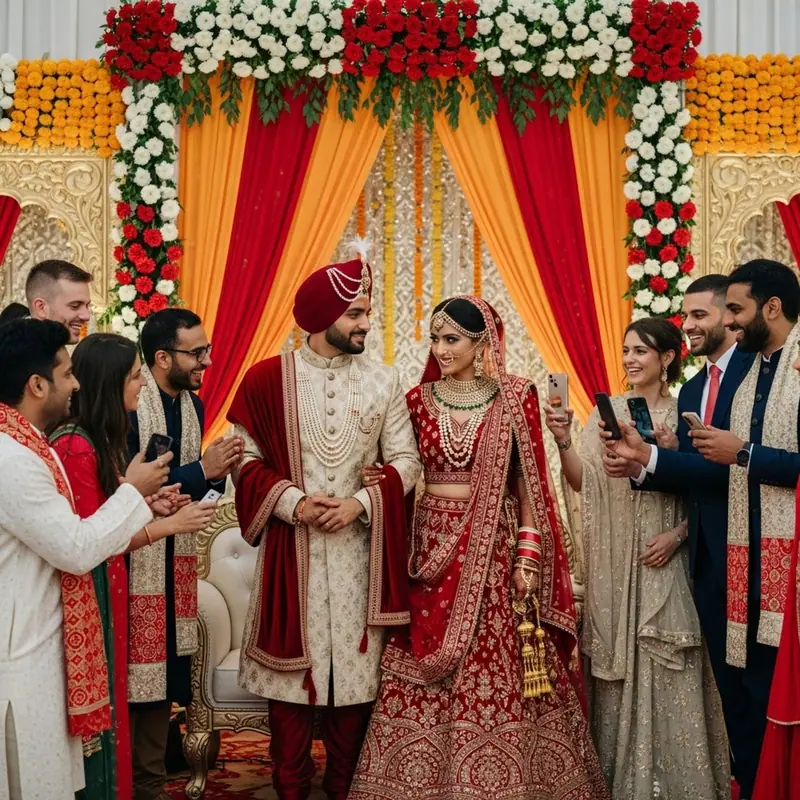
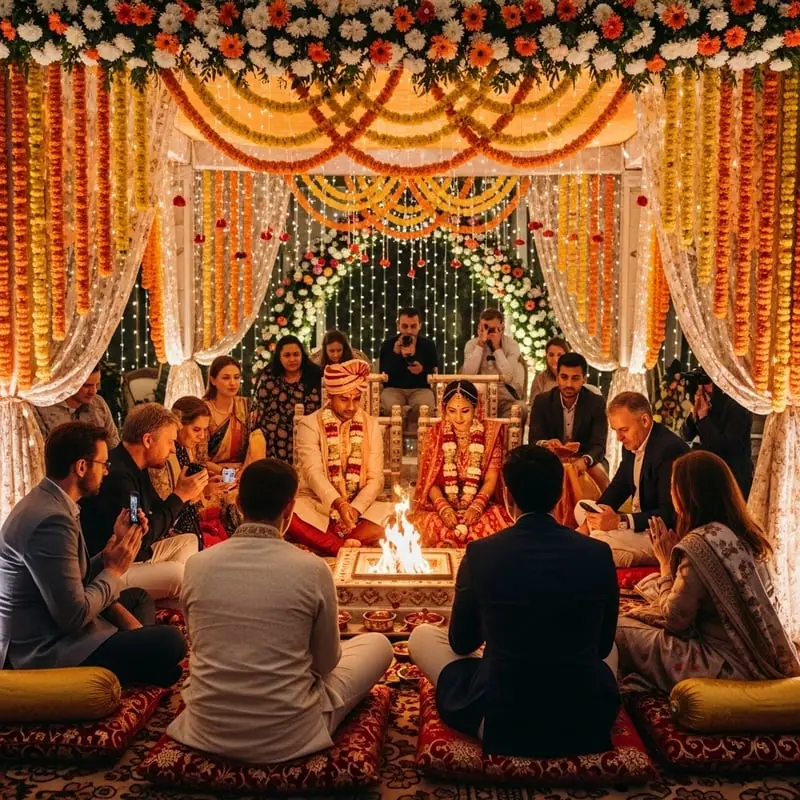
Indian weddings are very photogenic and families are usually happy for you to take pictures. Still, ask before photographing religious rituals such as the pheras or Anand Karaj, don't stand in front of the official photographers, and avoid flash during ceremonies.
Timing and pace
Events often start later than the time on the invitation and can continue past midnight. The main ceremony may be timed to an auspicious moment (muhurat), sometimes very early in the morning or late at night. Keep your schedule flexible, rest in between functions and stay hydrated.
During the ceremonies
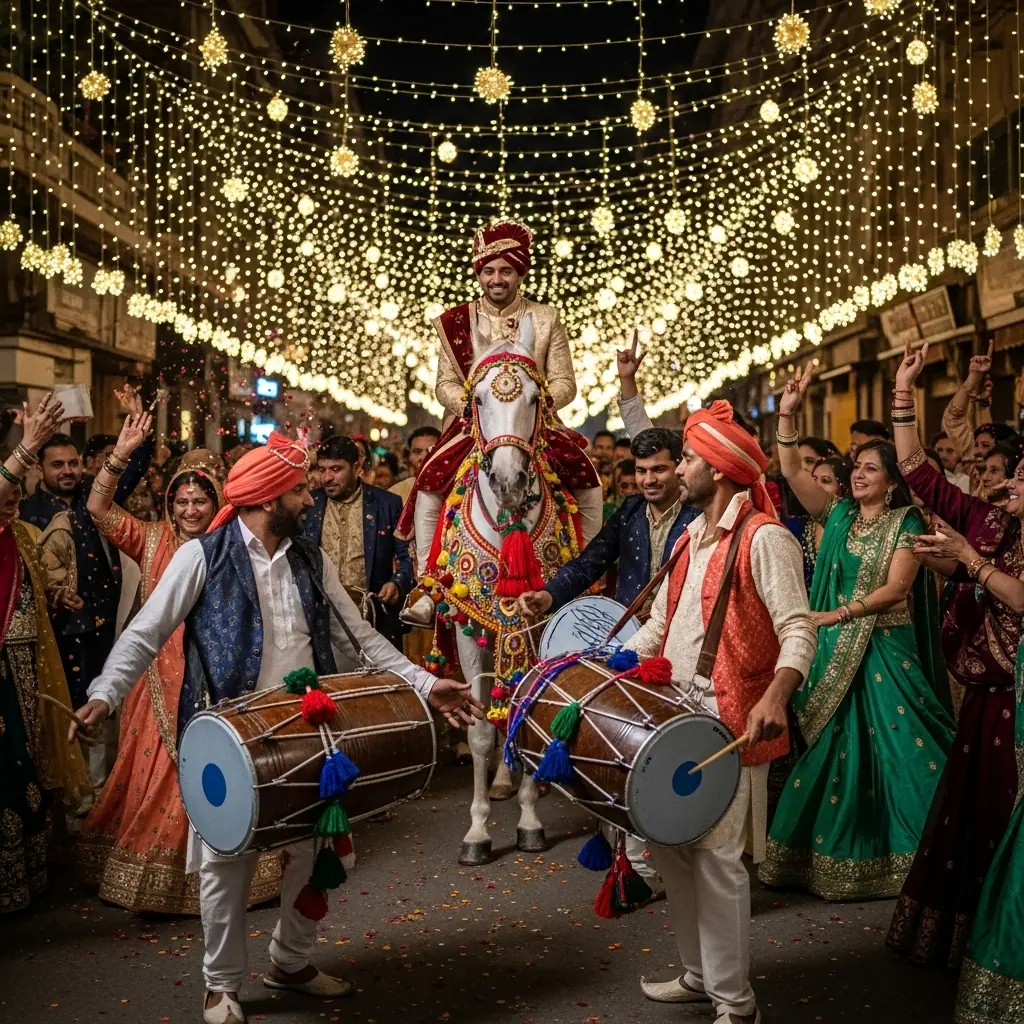
- Baraat: join the dancing — foreign guests are almost always pulled in!
- Pheras / Agni ceremony: sit quietly; this is the most sacred moment.
- Gurudwara: cover your head, remove shoes, sit on the floor and don't point your feet towards the Guru Granth Sahib.
- Vidaai: the bride's farewell is emotional; observe respectfully.
- Remove shoes wherever you see others doing so, including homes and prayer areas.
Attend a real Indian wedding
Choose North Indian, Punjabi, Rajasthani or South Indian — we'll match you with a family.
Explore wedding tours