 NamasteTrip
We've already covered what actually happens at an Indian wedding — the haldi, mehendi and sangeet functions that build up to the big day. But India's wedding traditions aren't one-size-fits-all: a wedding in Punjab looks, sounds and tastes completely different from one in Kerala or Rajasthan. This guide goes deeper into each of the four regional styles, so you can choose the celebration that matches what you actually want to experience.
The four wedding traditions, side by side
| Style | Signature rituals | Vibe | Best for |
|---|---|---|---|
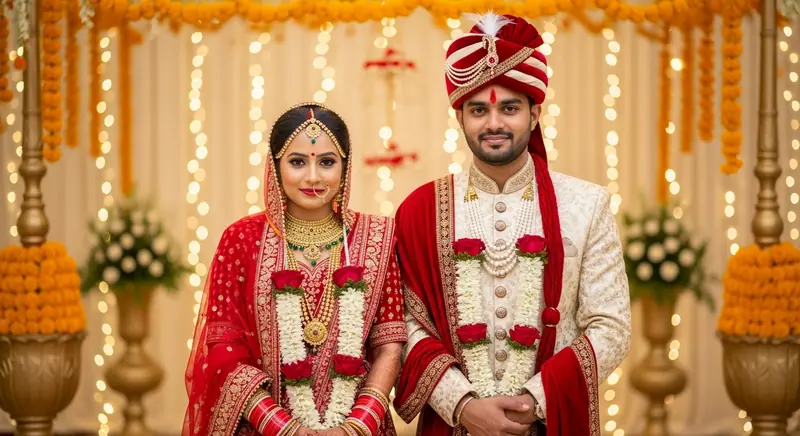
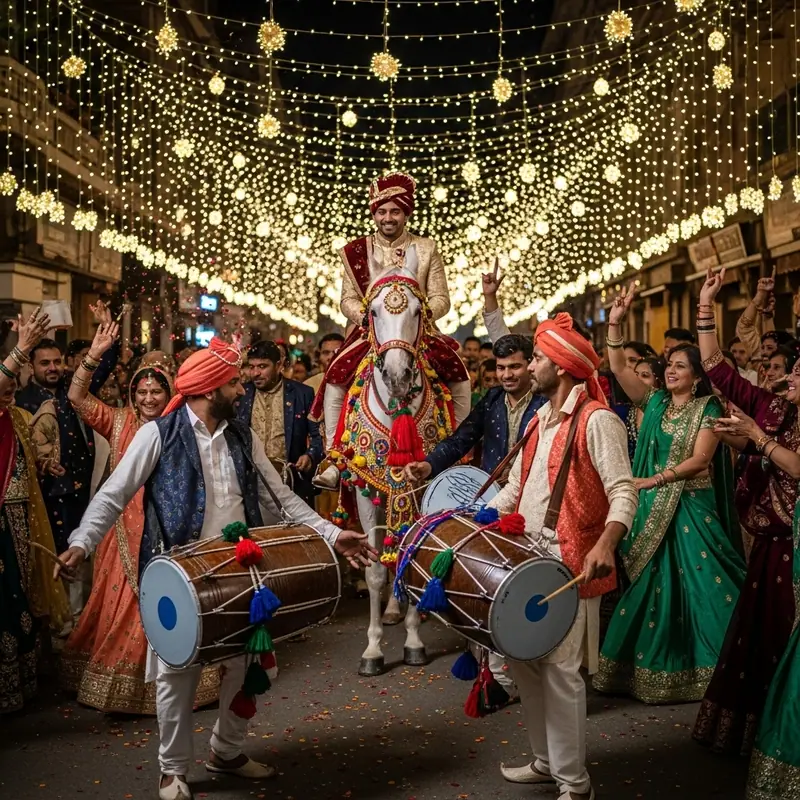
| North Indian Hindu | Baraat (groom's band procession), pheras, vidaai | Grand, ceremonial, deeply symbolic | First-timers who want the "classic" Bollywood wedding |
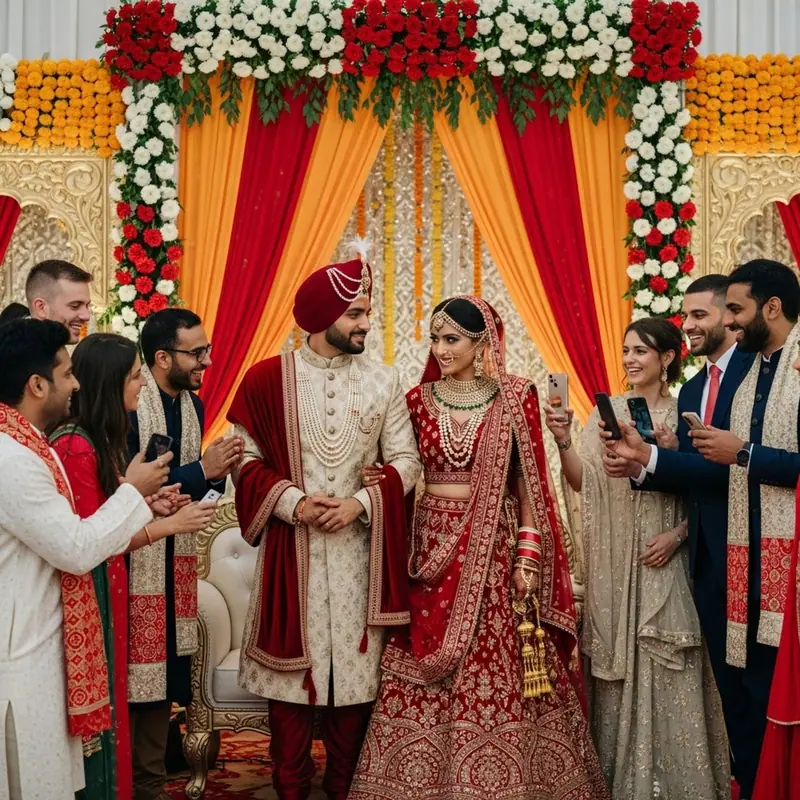
| Punjabi | Anand Karaj, dhol, bhangra, giddha, chooda & kalire | Loud, joyful, non-stop dancing | Travellers who want maximum energy and to join the dance floor |
| Rajasthani Royal | Palace/fort ceremonies, Rajput customs, pagdi (turban) tying, folk music | Regal, cinematic, steeped in history | A once-in-a-lifetime, movie-set atmosphere |
| South Indian | Temple rituals, Kanyadaan, mangalsutra, nadaswaram music, banana-leaf feast | Serene, sacred, deeply traditional | Travellers who want a quieter, ritual-rich experience |
North Indian Hindu wedding
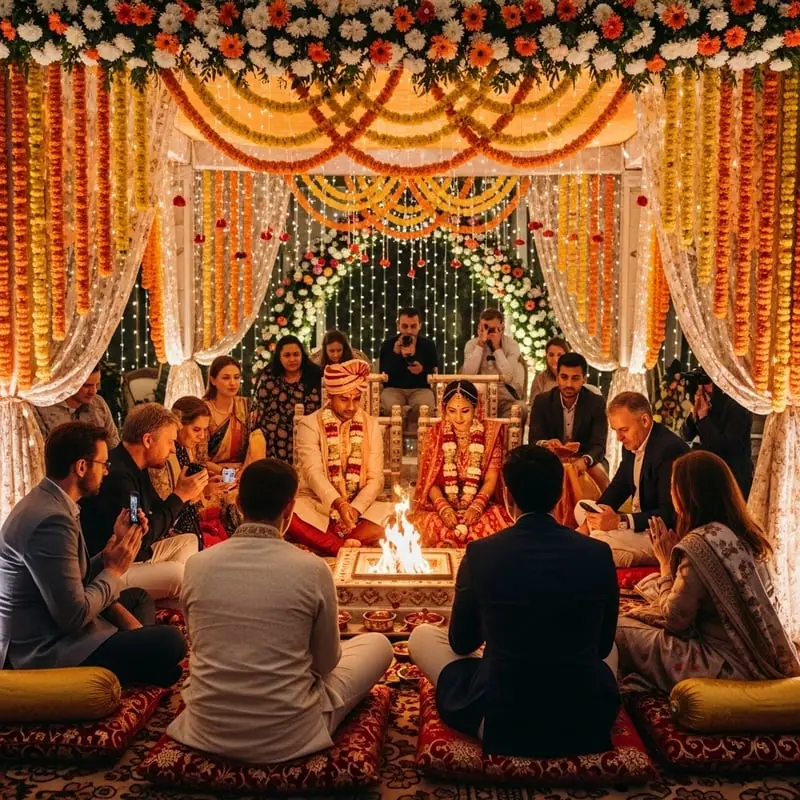
This is the wedding style most visitors picture when they imagine an Indian wedding — and it's the perfect entry point if you've never been to one before. The groom arrives on a decorated horse or car as part of the baraat, a procession accompanied by a live band and dancing relatives that can hold up traffic for blocks (in the best way). The couple then take the pheras — seven rounds around a sacred fire, each one a vow — before the emotional vidaai, where the bride formally leaves her family home. Expect marigold décor, a live band, and a reception that runs well past midnight. Common in Delhi, Uttar Pradesh and Madhya Pradesh.
Punjabi wedding
If you came to India to dance, this is your wedding. Punjabi celebrations are built around energy: the dhol drum leads every procession, and bhangra and giddha dance circles form spontaneously — you will be pulled in, and you should let yourself be. The religious ceremony, the Anand Karaj, takes place in a gurdwara and is calm and beautiful in contrast to the celebrations around it. Look out for the bride's chooda (red and white bangles) and kalire (gold hanging ornaments) — both rich with symbolism. Sarson da saag, makki di roti and a glass of lassi round out a Punjabi wedding feast that rarely disappoints.
Rajasthani royal wedding
For travellers chasing a fairytale, this is it. Rajasthani royal weddings are hosted in and around forts and palaces, drawing on centuries of Rajput tradition — turban-tying (pagdi) ceremonies, regal processions on horseback or elephant-back in grander celebrations, and live folk musicians performing through the night. The Ghoomar dance, performed by women in flowing lehengas, is often the visual centrepiece. Held mainly around Jaipur, Udaipur and Jodhpur, this style pairs naturally with a heritage haveli stay — see our hotels & homestays guide for where to base yourself.
South Indian wedding
The most serene of the four styles, South Indian weddings centre on ritual and devotion rather than spectacle. Ceremonies typically take place in or near a temple, with the sacred Kanyadaan (giving away of the bride) and the tying of the mangalsutra as the emotional core. The sound of the nadaswaram — a traditional wind instrument — fills the ceremony hall, brides wear silk sarees (often Kanjeevaram), and the wedding feast is served on a banana leaf, with rice, sambar and payasam among the highlights. Expect a slower pace, more reflection and a strong sense of tradition — common across Tamil Nadu and Kerala.
How to choose the right one for you
- Want the classic Bollywood scene? Go North Indian Hindu — baraat, pheras and all.
- Want to dance until you can't feel your feet? Choose Punjabi.
- Want a once-in-a-lifetime, palace-backdrop celebration? Choose Rajasthani royal.
- Want something quieter, sacred and steeped in ritual? Choose South Indian.
- Can't decide? Tell your host family coordinator what kind of experience you're after — colourful and loud, or calm and meaningful — and they'll help match you with the right family and region.
Attend a real Indian wedding
Choose North Indian, Punjabi, Rajasthani or South Indian — we'll match you with a family.
Explore wedding tours