 NamasteTrip
All 12 rituals at a glance
| Ritual | When | What happens | Can guests join? |
|---|---|---|---|
| Roka / Sagai | Weeks or months before | Families formally agree to the match; rings exchanged at the Sagai | Close family only |
| Tilak | A few days before | Bride's male relatives bless the groom with a tilak on the forehead | Watch |
| Haldi | 1–2 days before, morning | Turmeric paste applied to bride and groom | Yes — wear yellow |
| Mehendi | 1–2 days before, afternoon | Henna designs on the bride's hands and feet; music and snacks | Yes — get henna too |
| Sangeet | Evening before | Dance performances, songs and a party | Yes — dance! |
| Baraat | Wedding day, evening | Groom arrives on a horse with dhol drums and dancing guests | Yes — dance with the groom's side |
| Milni | On the Baraat's arrival | Elders of both families embrace and exchange gifts (strong in Punjabi weddings) | Watch |
| Jaimala / Varmala | After the Baraat | Bride and groom exchange flower garlands on stage | Cheer and take photos |
| Kanyadaan | Main ceremony | Bride's parents place her hand in the groom's | Watch quietly |
| Pheras / Saptapadi | Main ceremony, at the muhurat | Seven rounds of the sacred fire with seven vows | Watch quietly; sometimes shower petals |
| Sindoor & Mangalsutra | Straight after the pheras | Groom applies vermilion to the bride's hair parting and ties the sacred necklace | Watch |
| Vidaai | Night's end or next morning | The bride leaves her family home with the groom | Watch respectfully |
Before the wedding: Roka, Sagai and Tilak
Roka is the moment the two families formally "stop" looking for other matches — a small gathering with sweets, blessings and gifts. The Sagai (engagement, also called mangni) follows, where the couple exchange rings. In many North Indian families the Tilak ceremony takes place a few days before the wedding: the bride's brother and male relatives visit the groom's home and mark his forehead with a tilak to welcome him into the family. These are intimate family events, so foreign guests usually join from the Haldi onwards.
Haldi: the turmeric ceremony
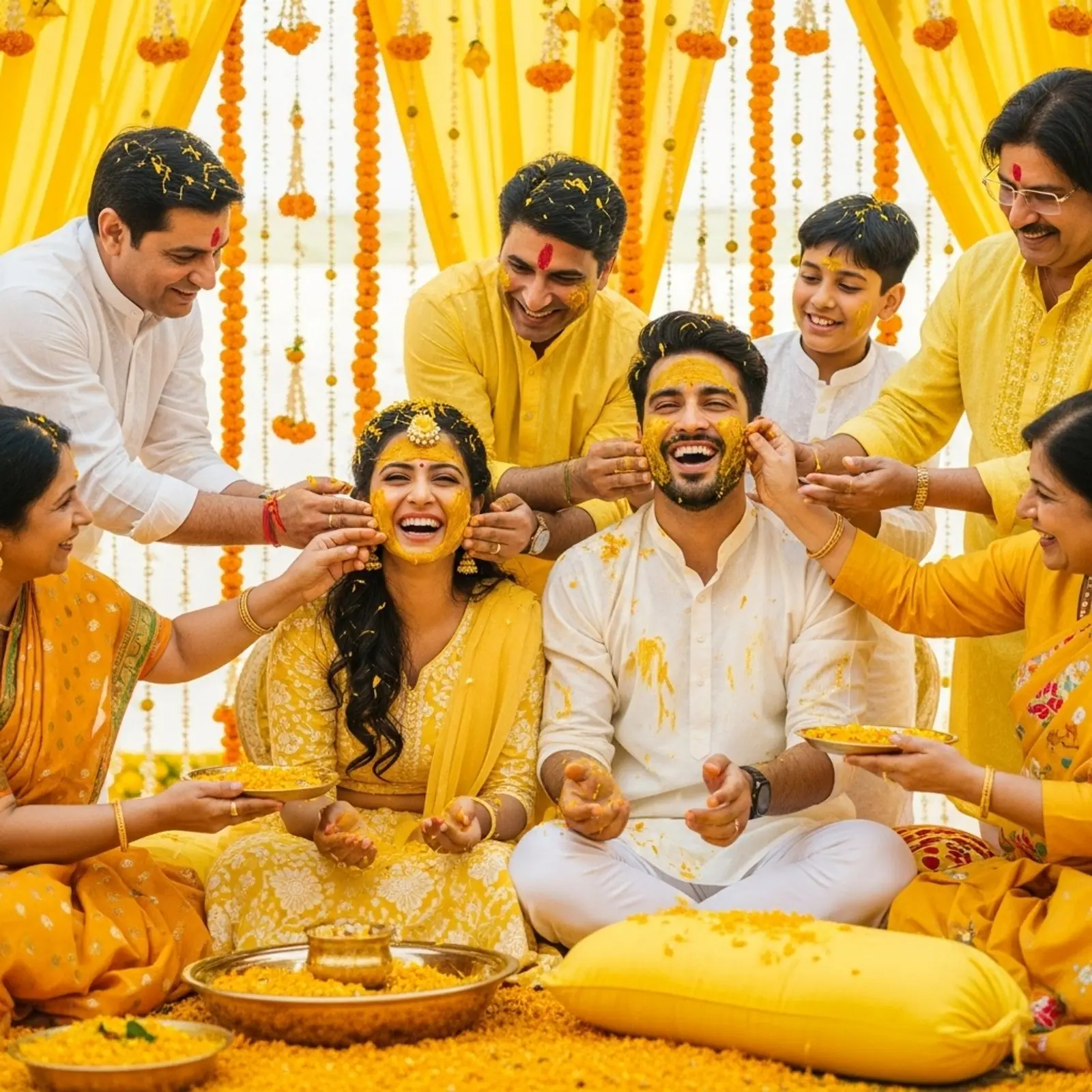
The Haldi ceremony is held on the morning of the wedding or the day before, separately at the bride's and groom's homes. Relatives smear a paste of turmeric, gram flour, rose water and oil on the couple's face, arms and feet. Turmeric is believed to bring a natural glow and to ward off bad luck before the wedding. It is messy, loud and full of laughter — expect to get some yellow on you too.
Guest tip: wear yellow or an old light-coloured outfit you don't mind staining. Turmeric stains are stubborn on fabric and nails for a day or two.
Mehendi: the henna ceremony
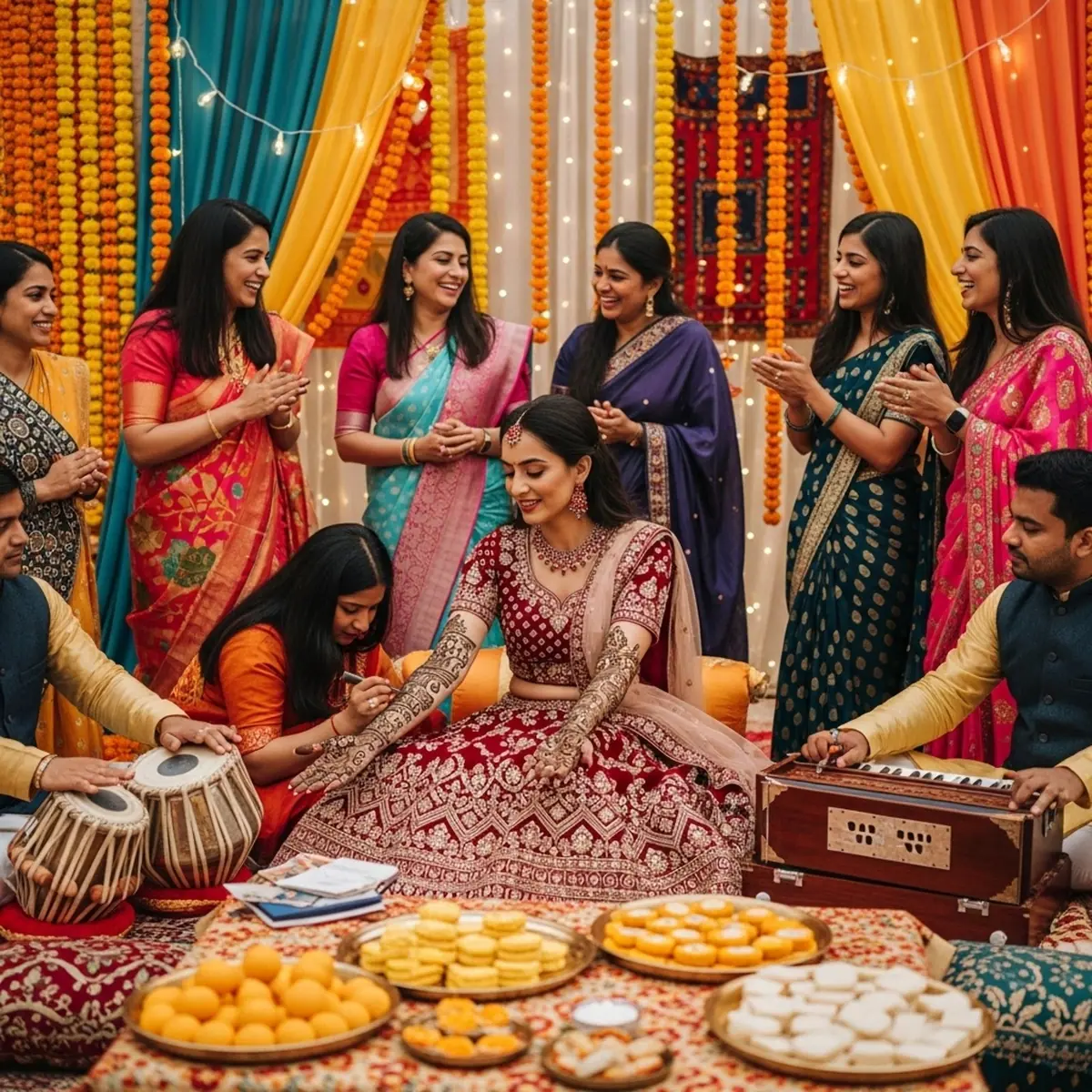
At the Mehendi, a henna artist draws intricate patterns on the bride's hands and feet, often over several hours. A popular tradition is hiding the groom's name or initials inside the design — he has to find it on the wedding night. Female guests, including foreign visitors, are almost always offered a smaller design on their palms. Folk songs, a dhol drum and plenty of snacks keep the afternoon going.
Guest tip: leave the henna paste on for at least two to three hours and avoid washing it with water straight away — the colour deepens from orange to a rich brown over the next day.
Sangeet: the music night
The Sangeet is the party of the wedding. Families of the bride and groom perform rehearsed dance routines to Bollywood songs, cousins tease the couple with skits, and a DJ keeps the dance floor full until late. It is the easiest event for a first-timer to enjoy: you don't need to know any rituals — just dance. If you're invited to join a group routine, say yes; it is one of the best ways to bond with the family.
Wedding day: Baraat, Milni and Jaimala
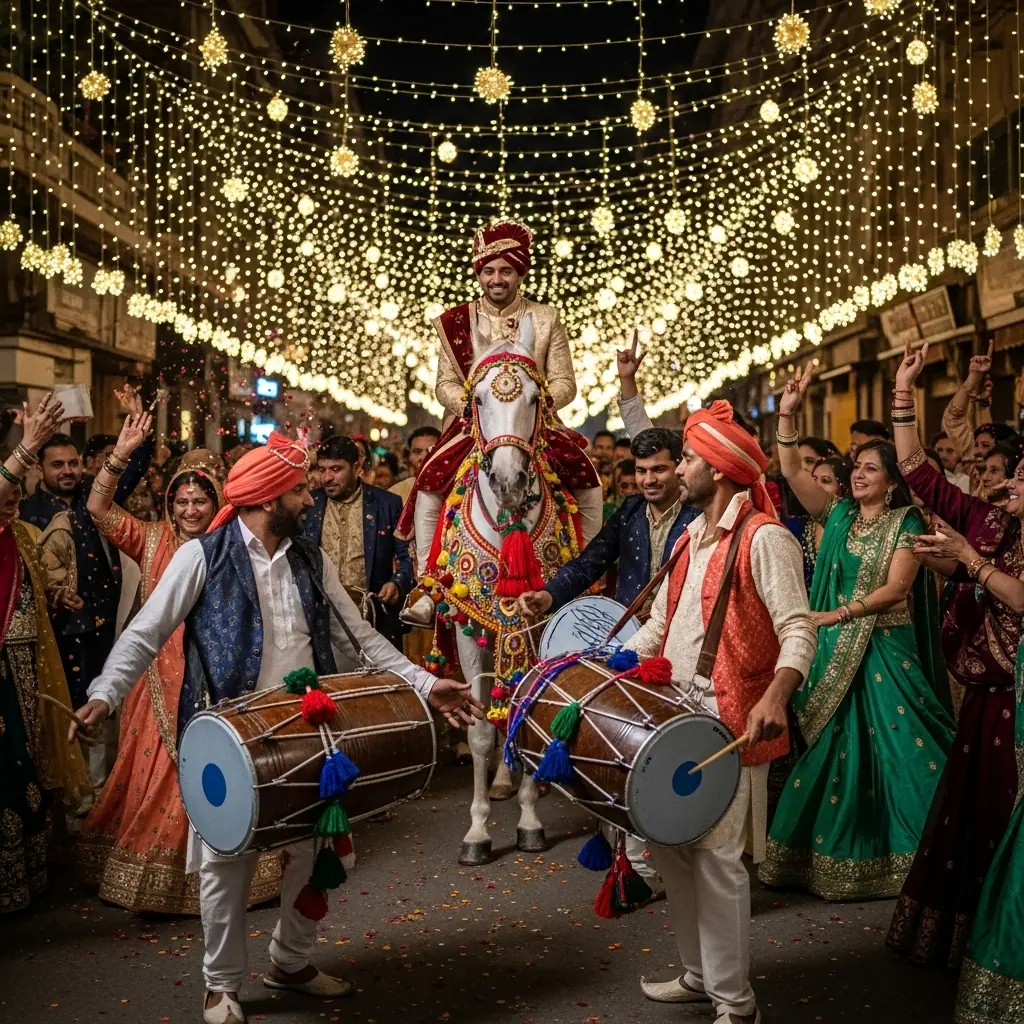
The wedding day begins in earnest with the Baraat. The groom, in a sherwani and turban (safa) with a sehra veil of flowers or pearls, rides to the venue on a decorated horse — sometimes an elephant or a vintage car — while his family and friends dance in front to a brass band and dhol. It moves slowly on purpose: the dancing is the point. Foreign guests on the groom's side are pulled into the dance within minutes.
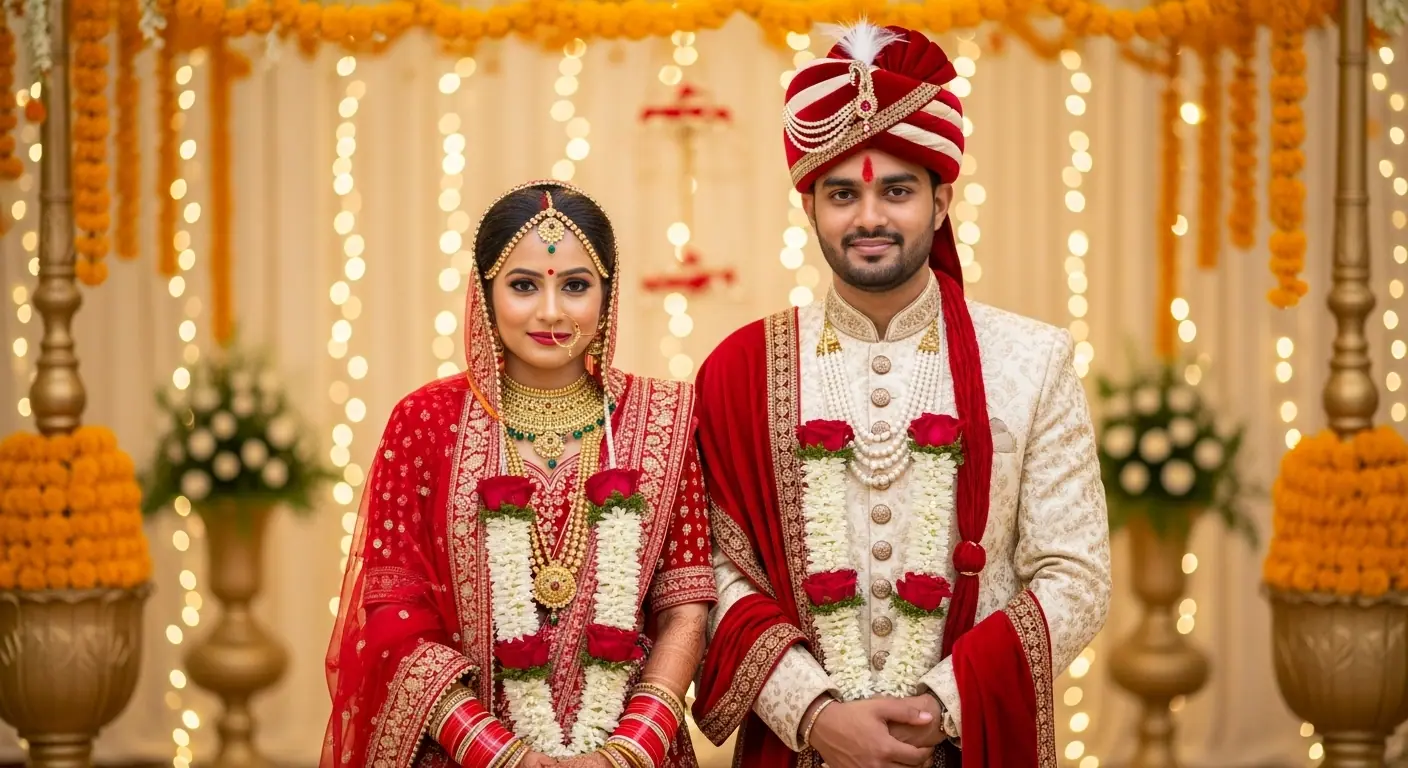
When the Baraat reaches the venue, the bride's family welcomes them. In Punjabi weddings this is the Milni, where matching relatives (the two fathers, the two uncles and so on) embrace and exchange gifts. Then comes the Jaimala or Varmala: bride and groom exchange heavy flower garlands on a stage. Friends on each side often lift the couple up to make it harder for the other to place the garland — a crowd favourite.
The sacred ceremony: Kanyadaan, Pheras and Saptapadi
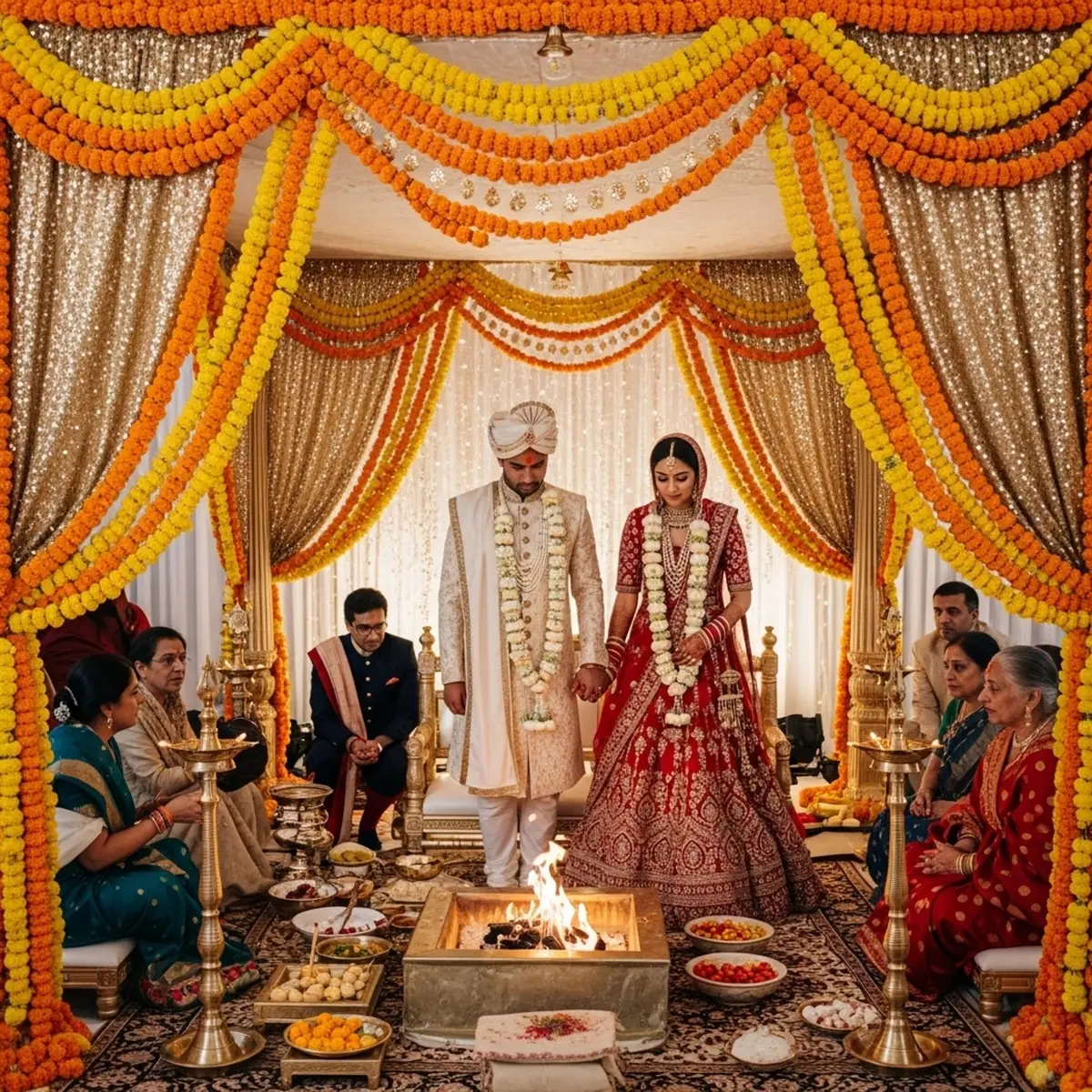
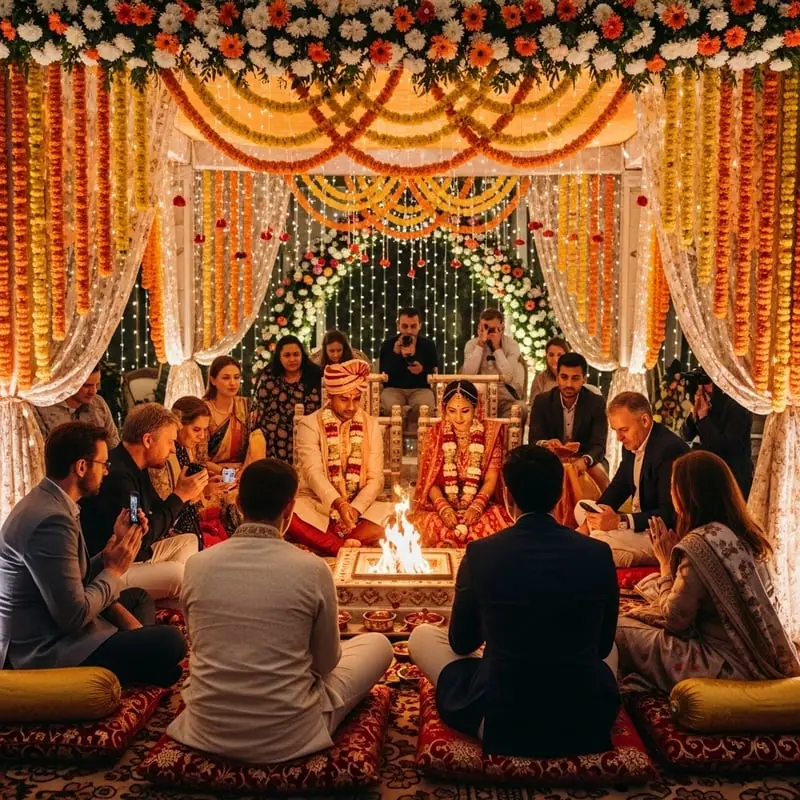
The religious heart of a Hindu wedding takes place under a decorated canopy called the mandap, around a small sacred fire (agni), led by a priest (pandit). It is timed to an auspicious moment — the muhurat — which can fall late at night or in the early hours.
- Kanyadaan: the bride's parents place her right hand in the groom's, entrusting her to him. It is one of the most emotional moments for the bride's family.
- Granthi bandhan: the end of the groom's scarf is tied to the bride's dupatta, symbolising their union.
- Pheras / Saptapadi: the couple walk around the fire — seven rounds in most North Indian weddings — making a vow with each step: nourishment, strength, prosperity, happiness, children, long life together and lifelong friendship. Under Section 7 of the Hindu Marriage Act, 1955, where the ceremony includes the saptapadi, the marriage becomes complete and binding when the seventh step is taken.
- Sindoor and Mangalsutra: the groom applies red vermilion (sindoor) to the parting of the bride's hair and ties a black-and-gold beaded necklace (mangalsutra) around her neck — the two traditional signs of a married Hindu woman.
Meanwhile, the bride's sisters and cousins play Joota Chupai: they steal the groom's shoes while he sits in the mandap and only return them for a cash "ransom" — a light-hearted negotiation that everyone watches.
After the wedding: Vidaai and Griha Pravesh
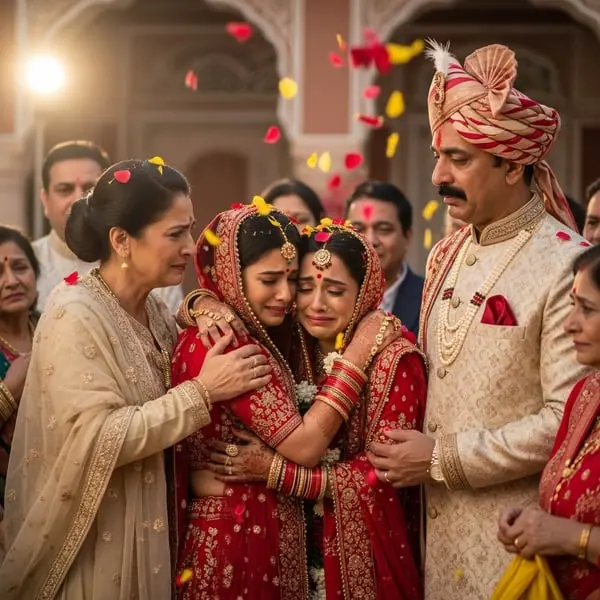
The Vidaai is the bride's farewell from her parents' home. She throws handfuls of rice back over her head to wish prosperity on the family she is leaving, and there are usually tears on all sides. At the groom's house, the Griha Pravesh welcomes her: she gently kicks over a pot of rice at the threshold and steps into the home, often dipping her feet in red alta water, to symbolise Lakshmi (the goddess of prosperity) entering the house. A reception follows in a day or two.
How the rituals change by region
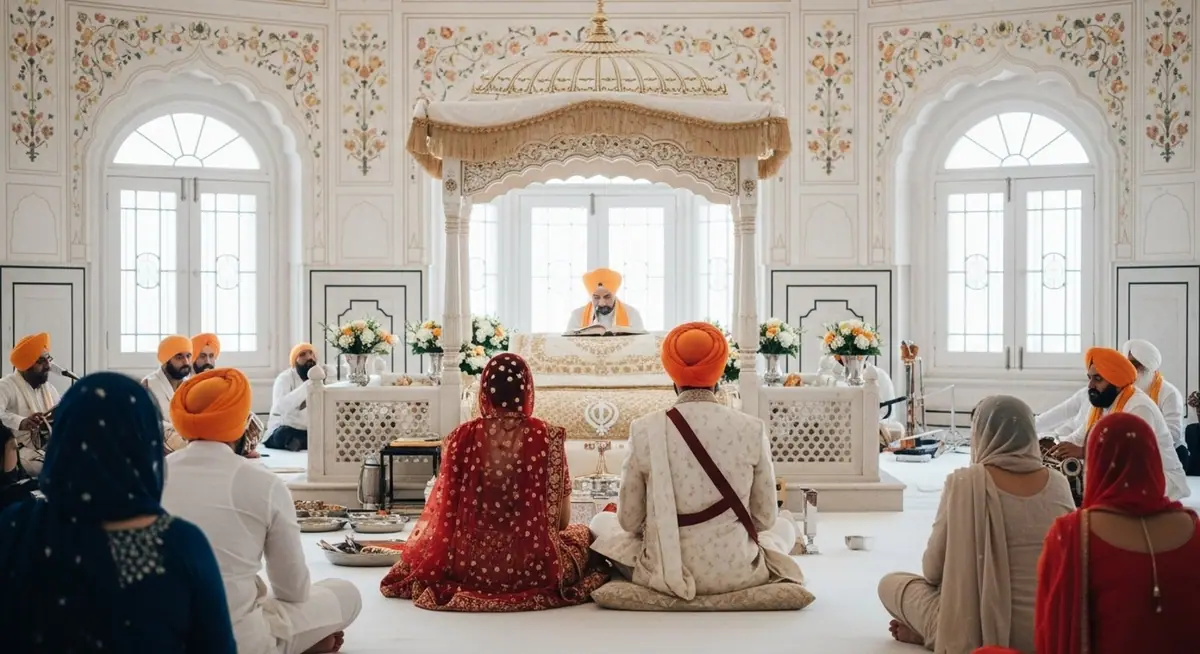
- Punjabi and Sikh weddings: the bride's maternal uncle gives her the red-and-white chooda bangles, and friends tie golden kalire ornaments to them. Sikh couples marry in the Anand Karaj at a Gurudwara, usually in the morning: they walk four times around the Guru Granth Sahib while the four laavan hymns are sung. It has been recognised in law since the Anand Marriage Act of 1909. Read more on our Punjabi wedding experience page.
- Rajasthani weddings: the same core rituals, with royal scale — turbaned (safa) Baraats, folk musicians, the Ghoomar dance, and ceremonies held in forts and havelis. See the Rajasthani royal wedding.
- South Indian weddings: generally shorter and calmer, often held early in the morning in a temple or hall. In many Tamil weddings the groom pretends to leave for a life of study in the Kashi Yatra until the bride's father persuades him to marry; the couple sit on a swing for the Oonjal; and the most important moment is the tying of the thaali (mangalsutra), followed by a banana-leaf feast. See the South Indian wedding.
Which rituals can foreign guests take part in?
- Join in fully: Haldi, Mehendi, Sangeet, the Baraat dance, and the Jaimala cheering.
- Watch quietly: Kanyadaan, the pheras or Anand Karaj, sindoor and mangalsutra. Sit, don't wander through the mandap, and ask before taking photos.
- Observe with respect: the Vidaai is a private, emotional moment for the bride's family.
- Dress for each event: yellow for Haldi, bright colours for Mehendi and Sangeet, your best Indian outfit for the wedding. Our what to wear guide has outfit ideas, and the wedding etiquette guide covers gifts, food and photography.
See these rituals at a real Indian wedding
Join a North Indian, Punjabi, Rajasthani or South Indian family for their wedding — a family member explains every ritual. Book at least 15 days ahead.
Explore wedding tours